
Costruzioni Meccaniche di Saronno
Costruzioni Meccaniche di Saronno was an Italian company producing steam locomotives and cars, active from 1887 to 1918.
Also recorded as Officine Meccaniche di Saronno · Saronno
Costruzioni Meccaniche di Saronno
Buch-t · Public domain
- Founded
- 1887
- Founder
- Maschinenfabrik Esslingen
- Headquarters
- Italy
- Activity
- automotive industry · locomotive manufacturing
- Dissolved
- 1918
VALÉORINE Encyclopedia
VALÉORINE documentary reading
Documentary summary
Costruzioni Meccaniche di Saronno was an Italian company producing steam locomotives and cars, active from 1887 to 1918.
Admitted source layer · organised and presented by VALÉORINE
Reference Check
Propose documentary evidence for Costruzioni Meccaniche di Saronno. A contribution is never written directly as fact: identity, source, rights and evidence gates still decide.
Sign in to contribute
Documentary evidence
Documentary basis
Authority files
wikidata · Q1805748 · wikipedia · Costruzioni Meccaniche di Saronno
In this article
Origins
Origins
It is associated with Italy. The record gives 1887 as its date of establishment or first appearance. Activity is recorded as ending in 1918. Its recorded founders are Maschinenfabrik Esslingen. The recorded field of activity is automotive industry and locomotive manufacturing.
The origins of the engineering company are to be found in a framework of political agreements of the economic-military alliance assumed by the Kingdom of Italy, the German Empire and the Austro-Hungarian Empire in the early 1880s. Favoured by these international cooperation agreements, the German company Maschinenfabrik Esslingen founded the Costruzioni Meccaniche di Saronno in the Varese municipality and began to manufacture its renowned steam locomotives in Italy.
Production
Production
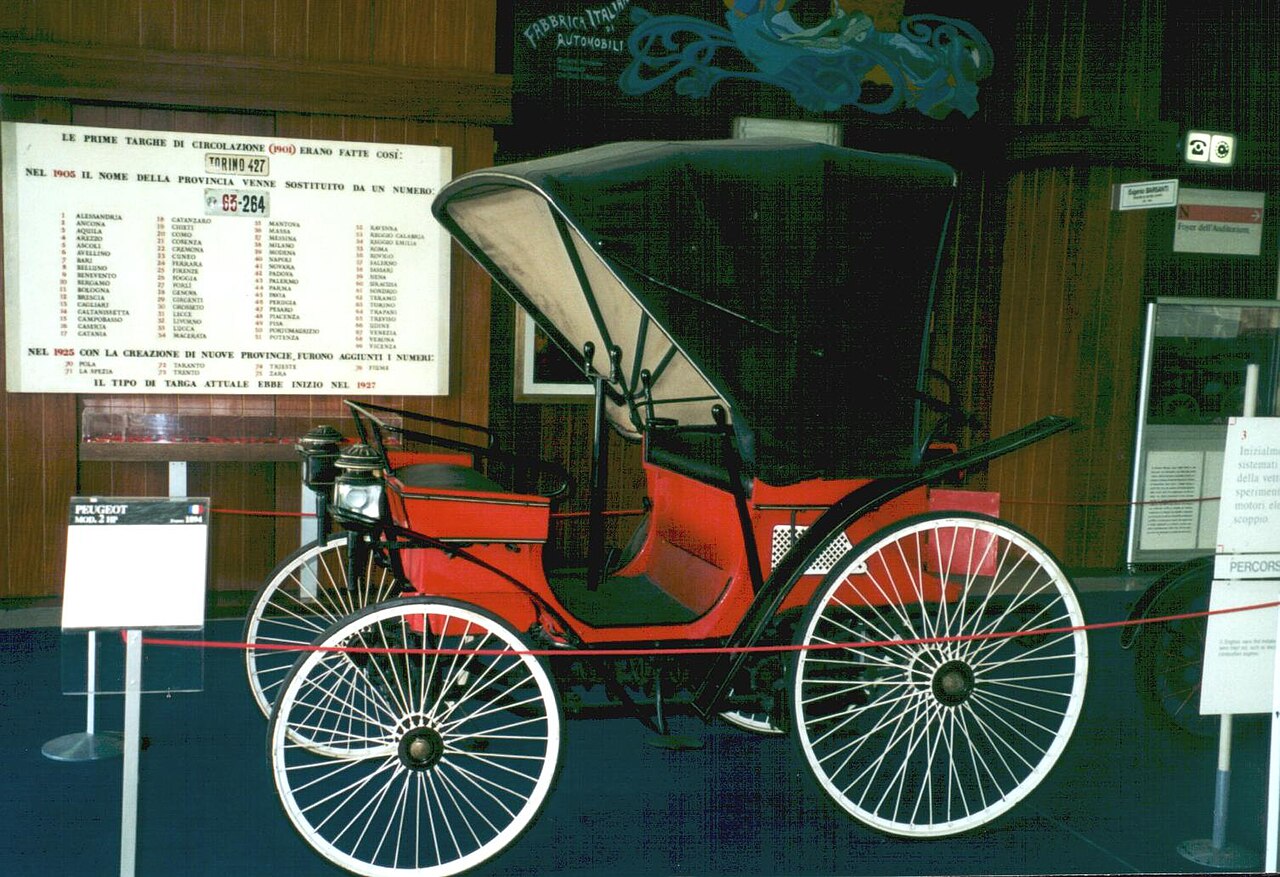
Between 1887 and 1913, the company built steam locomotives of various track gauges for a number of railway companies. Beginning in 1894, it began assembling Peugeot Type 3 cars, produced under a Peugeot license and with engines supplied by the French company.
World War I
World War I
During the First World War, the company converted to war production. At the end of the conflict the company, until then predominantly backed by German capital, was acquired by the engineer Nicola Romeo with backing from a Swiss bank, but it appears that Romeo closed the plant in 1918 and did not revive it until 1925.
Nicola Romeo
Nicola Romeo
In 1911 Nicola Romeo (later the owner of Alfa Romeo) founded the limited partnership Ing. Nicola Romeo e Co. for the production of mining machinery. The company soon began to specialize in the production of railway rolling stock, taking advantage of the opportunities offered by the emerging internal combustion engine technology to license some of the first Italian railcars. After some years of inactivity, Romeo re-started the Costruzioni Meccaniche plant as CEMSA in 1925.

Locomotive Mogul n° 64 168 des Chemins de fer de l'État Italien, à partir de 1919 n° 640.168
Exposition universelle. 1911. Turin [Hrsg.]: Groupe VII. Classes 39 et 40. Industrie des Transports. Chemins de fer et tramways. p. 37, Fig. 13 Cnum
Places
Named by the record
Places
Only places the record itself states, plotted where the house gazetteer settles their coordinates. Nothing is inferred from a name or a nationality.
- Italy
Citations
References
Each reference names the institution holding it, so a reader may go to the document itself.
reference work
Secondary witnessreference work
Secondary witness
The Encyclopedia exists whether or not anything is for sale. Corrections are recorded rather than overwritten, and every version of this record is kept. Published 16 August 2026.
Elsewhere in Collectables
20,755 published records in this field, each with its sources named.
- CosmonauticaWork
- Cosmos no Sora niWork
- Cosmos X2Work
- Cossacks 3Work
- Costume Quest 2Work
- Cottin & DesgouttesOrganisation
- CottonOrganisation
- couesnophoneTerminology
Best supported in this field
For owners
Own an object connected with Costruzioni Meccaniche di Saronno?
A specialist will read what you send and tell you what the house can establish, what it cannot, and whether the object is suited to sale. There is no charge and no obligation. The object stays with you throughout; nothing is shipped to us unless it is arranged in writing beforehand.