
Cornelius Varley
Illustration — Newstead Abbey, oils, 1825, Government Art Collection Cornelius Varley, FRSA (21 November 1781 – 2 October 1873) was a British painter, mostly in watercolour, printmaker and optical instrument-maker. He invented the graphic telescope and the graphic microscope.
Cornelius Varley
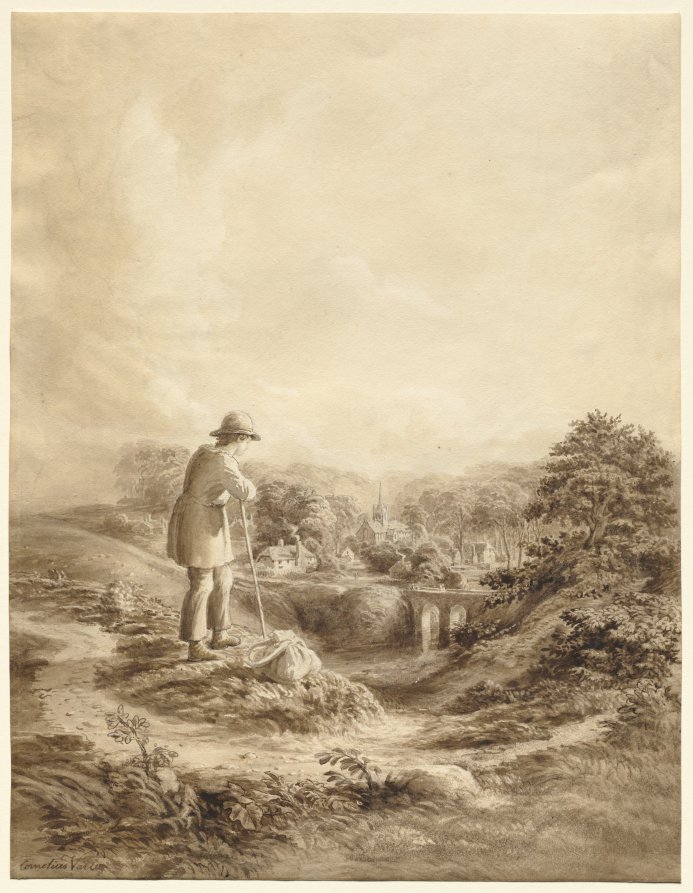
Cornelius Varley · The Cleveland Museum of Art · John L. Severance Fund · CC0
- Born
- 1781 · Mare Street.
- Died
- 1873 · Stoke Newington.
- Nationality
- Kingdom of Great Britain · United Kingdom of Great Britain and Ireland
- Occupation
- painter · optical instrument maker · inventor · micrographer · artist
- Honours
- Fellow of the Royal Society · Fellow of the Royal Society of Arts
VALÉORINE Encyclopedia
VALÉORINE documentary reading
Documentary summary
Illustration — Newstead Abbey, oils, 1825, Government Art Collection Cornelius Varley, FRSA (21 November 1781 – 2 October 1873) was a British painter, mostly in watercolour, printmaker and optical instrument-maker. He invented the graphic telescope and the graphic microscope.
Admitted source layer · organised and presented by VALÉORINE
Note VALÉORINE
Cornelius Varley (1781–1873) was an artist, inventor and micrographer, among other activities, of British and British nationality. The artist was born in Mare Street and died in Stoke Newington. Cornelius Varley was a member of Royal Microscopical Society, Royal Society and Royal Watercolour Society.
Works are held at Auckland Art Gallery, Bryn Mawr College Special Collections and National Gallery of Canada, among others. Honours include Fellow of the Royal Society and Fellow of the Royal Society of Arts.
Composed from admitted, traceable facts · 29 September 2026
VALÉORINE
Reference Check
Propose documentary evidence for Cornelius Varley. A contribution is never written directly as fact: identity, source, rights and evidence gates still decide.
Sign in to contribute
World of VALÉORINE
Documentary connections
Only confirmed graph relationships appear here. Images are shown only when their identity and reuse rights both pass the documentary gate.
Documentary evidence
Documentary basis
Authority files
wikidata · Q5171468 · wikipedia · Cornelius Varley
In this article
Biography
Biography
Work by Cornelius Varley is recorded in the collections of National Gallery of Victoria, Auckland Art Gallery, Tate, National Gallery of Canada and Yale Center for British Art. Distinctions recorded are Fellow of the Royal Society and Fellow of the Royal Society of Arts.
• Illustration — Evening, watercolour, Yale Center for British Art Varley was born at Hackney, then a village north of London, on 21 November 1781. He was a younger brother of John Varley, a watercolour painter and astrologer, and a close friend of William Blake. He was educated by his uncle, a scientific instrument maker, and under him acquired a knowledge of the natural sciences. Around 1800, he joined his brother in a tour through Wales, and began the study of art. He was soon engaged in teaching drawing. From 1803 to 1859 he was an occasional exhibitor at the Royal Academy and he also contributed regularly to the displays of the Water-Colour Society, of which, in 1803, he was one of the founders, and of which he continued a member until 1821. He died in Hampstead on 2 October 1873.
Works
Works
Varley's non-scientific artistic works consist mainly of landscape watercolours; he was a founder member of the Old Watercolour Society, becoming the only founder-survivor left by the end of his life, although he had resigned in 1820, after the society divided. After this he devoted less time to landscape painting. He was "rejected unanimously" when he "rather surprisingly" applied to join the New Watercolour Society in 1844. His work has been described as "at once more traditional and more modern" than that of his brother: "his main interest seems to be in the building of his compositions from contrasting masses painted in even, unemphatic washes". He published a series of etchings of boats and other craft on the River Thames (Etchings of Shipping, 1809). He was the first person to make a telephoto image. As a printmaker, he was an early English user of lithography, though his works cannot be said to have made much use of the unique potential of the technique. His life as an artist was deeply connected to his scientific and technical pursuits. His optical inventions were improvements to the camera lucida and camera obscura long used by artists, and allowed him to draw both landscapes and microscopic studies in lucid detail. He also patented and sold his inventions. The Society of Arts awarded him silver medals in 1831 and 1833, and the Isis gold medal in 1841, for improvements to microscopes. His innovations included lever-controlled stages and an illumination-modifier. Varley invented the graphic telescope in 1809, and patented it in 1811. Unable to find a manufacturer who would make it, he went into manufacturing himself; this was his main occupation from 1814 onwards. He exhibited the graphic telescope at the Great Exhibition, winning a medal, in 1851. His firm also manufactured telegraphic equipment and testing apparatus. He published Treatise on Optical Drawing Instruments in 1845.
Family
Family
In 1821, Varley married Elizabeth Livermore Straker. They had ten children including telegraph engineer Cromwell Fleetwood "C.F." Varley, as Varley claimed descent from Oliver Cromwell. • Illustration — Henham Hall, Suffolk, England, 1801 • Illustration — Craig Goch, Moel Hebog, North Wales, circa 1802 • Illustration — Boats on a River, Windmill in Distance. 1809 lithograph • Illustration — Two Beached Fishing Boats, 1809 etching • Illustration — Dolgelly, Merionethshire. 1815 • Illustration — Caernarvonshire, Conway. 1815 • Illustration — William Gell, by Cornelius Varley, 1816 (National Portrait Gallery). • Illustration — Design for a general chemical laboratory, with the apparatus. 1822 • Illustration — Drawing, Landscape with Figure in Foreground, c 1840. Illustration design for Samuel Roger's poem "The Pleasures of Memory" • Illustration — Portrait of a Man in Profile • Illustration — Irish Cars, date unknown • Illustration — Nitella translucens & Chara vulgaris, micrograph, 1833. Chloroplast movement shown. • Illustration — Chara vulgaris with three globules or male blossoms, 1842 • Illustration — Chara vulgaris with one flower or globule open, 1844 • Illustration — Nitella translucens, 1844. Cytoplasmic streaming is shown. • Illustration — Clocks; a striking mechanism • Illustration — Surgical instruments
Places
Named by the record
Places
Only places the record itself states, plotted where the house gazetteer settles their coordinates. Nothing is inferred from a name or a nationality.
Mare Street.
Birth place
Stoke Newington.
Death place
Legacy
A replica of Varley's graphic telescope was built for the Through the Looking Lens exhibition held at the American Philosophical Society Museum in 2013. He was one of the co-founders and contributors of the Royal Microscopical Society. His nephew Andrew Pritchard trained with him and became well-known as a micrographer.
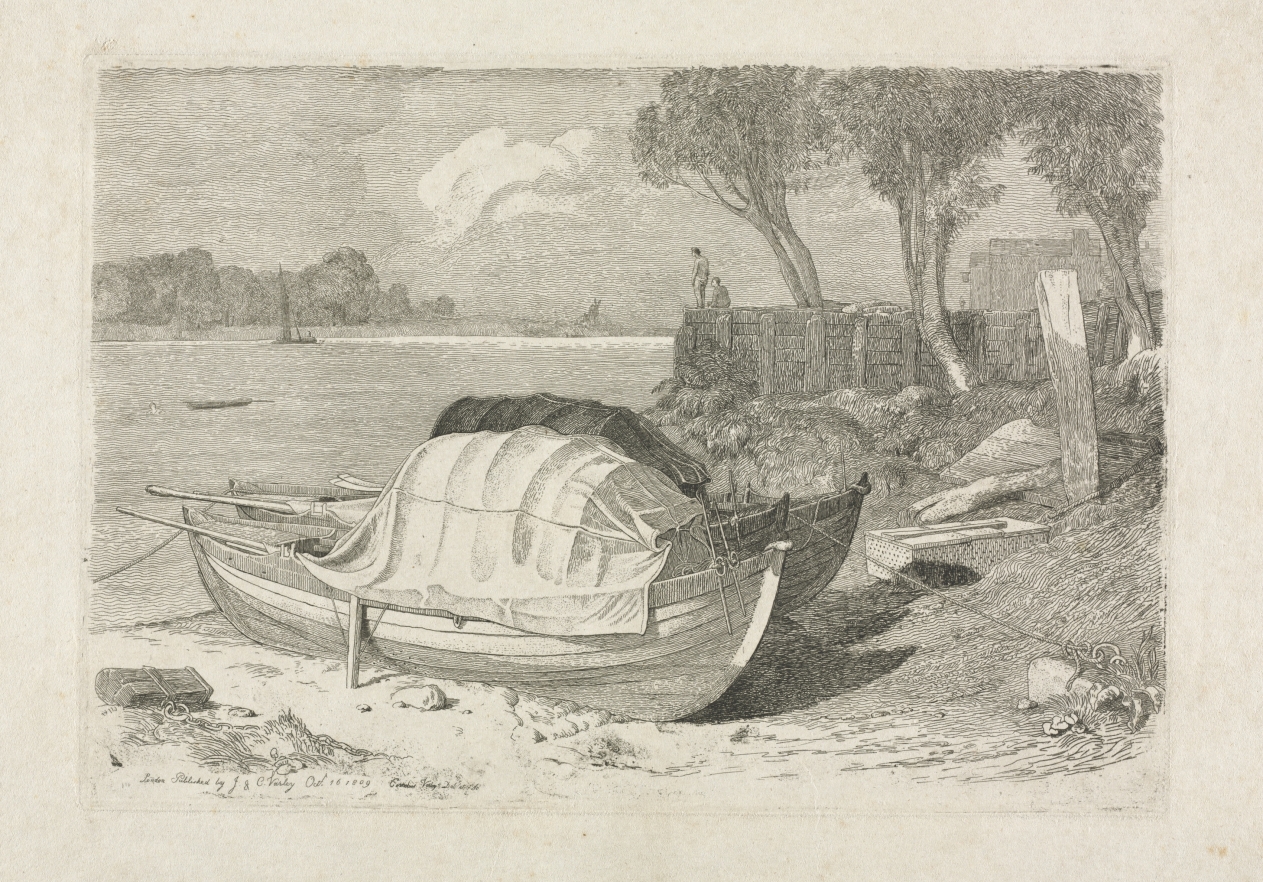
Two Beached Fishing Boats, 1809, by Cornelius Varley
Cornelius Varley · The Cleveland Museum of Art · John L. Severance Fund
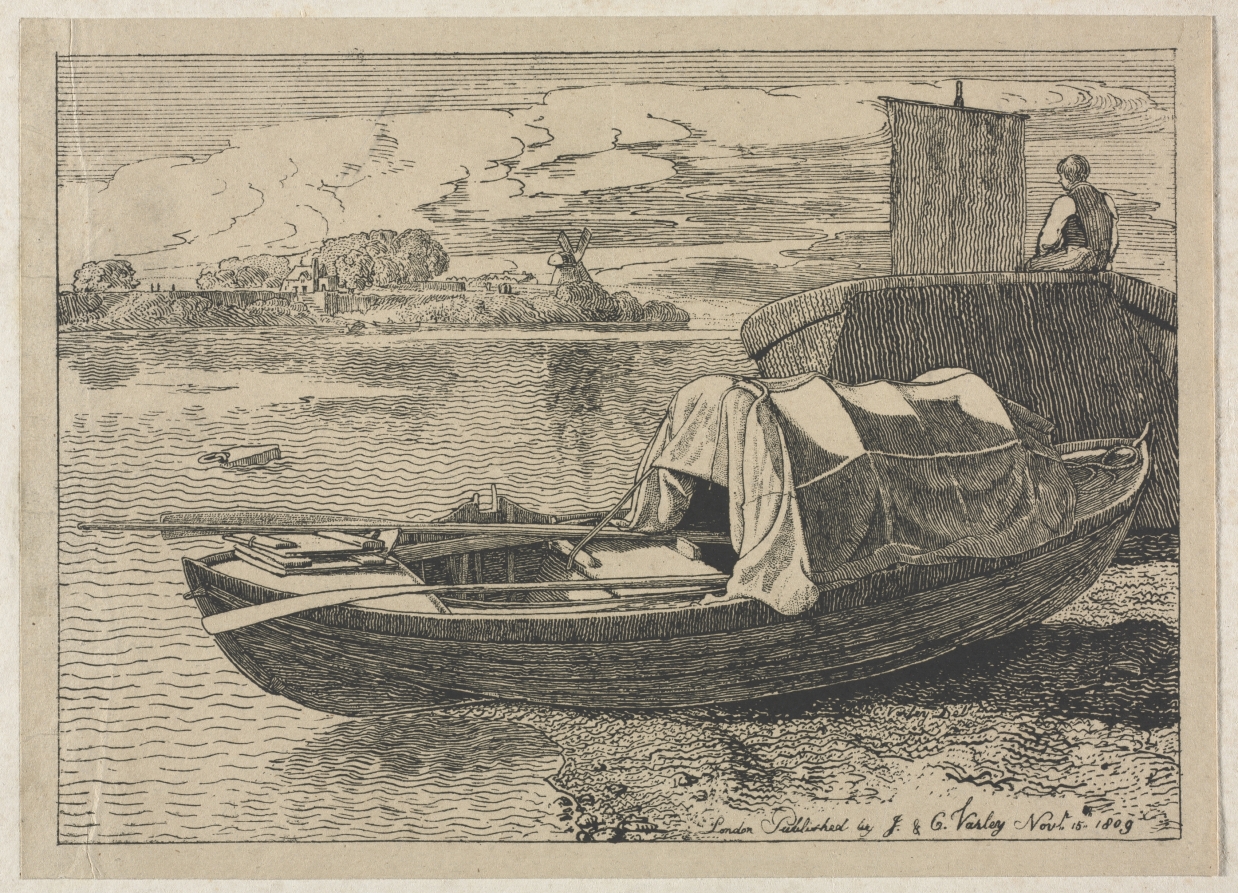
Boats on a River, Windmill in Distance, 1809, by Cornelius Varley
Cornelius Varley · The Cleveland Museum of Art · Gift of Elizabeth Carroll Shearer in memory of Robert Lundie Shearer
Notes from the source article
Cited by Wikipedia
Notes from the source article
These works are cited by the source article, in its own numbering. They are recorded as its citations, not as sources VALÉORINE has verified.
- 1.Mallalieu, Huon, The Dictionary of British watercolour artists up to 1920, pp 231-232, Volume II M-Z, 3rd edition, 2002, Woodbridge, Suffolk: Antique Collectors' Club,
- 2.Who used the camera lucida?. NeoLucida.
- 3.Cornelius Varley and his Fantastical Patent Graphic Telescope Machine. WHYY. August 9, 2013.
- 4.Original ad for graphic telescope.
- 5.Cornelius Varley Microscopes. www.microscope-antiques.com.
- 6.Forsythe, Pamela. Marrying art with scientific inquiry opened new windows on the world. WHYY. November 12, 2013.
- 7.Grace's Guide to British Industrial History. Cornelius Varley. www.gracesguide.co.uk.
- 8.Grace's Guide to British Industrial History. Varley and Son. www.gracesguide.co.uk.
- 9.Morris, Jim. Camera Lucida Telescope, American philosophical Society. www.scitechantiques.com.
- 10.PBS. Cornelius Varley and his Patent Graphic Telescope Friday Arts.
- 11.Andrew Pritchard. microscopist.net.
References
Citations
References
Each reference names the institution holding it, so a reader may go to the document itself.
reference work
Secondary witnessreference work
Secondary witness
The Encyclopedia exists whether or not anything is for sale. Corrections are recorded rather than overwritten, and every version of this record is kept. Published 18 August 2026.
Elsewhere in Paintings
18,623 published records in this field, each with its sources named.
- Cornelius HoeyerArtist
- Cornelius Janson van Ceulen the YoungerArtist
- Cornelius KrieghoffArtist
- Cornelius van PoelenburghArtist
- CornoArtist
- Corrado GiaquintoArtist
- Corrie BoellaardArtist
- Corrie PabstArtist
Best supported in this field
For owners
Own a work by Cornelius Varley?
A specialist will read what you send and tell you what the house can establish, what it cannot, and whether the object is suited to sale. There is no charge and no obligation. The object stays with you throughout; nothing is shipped to us unless it is arranged in writing beforehand.