
Château de Malmaison
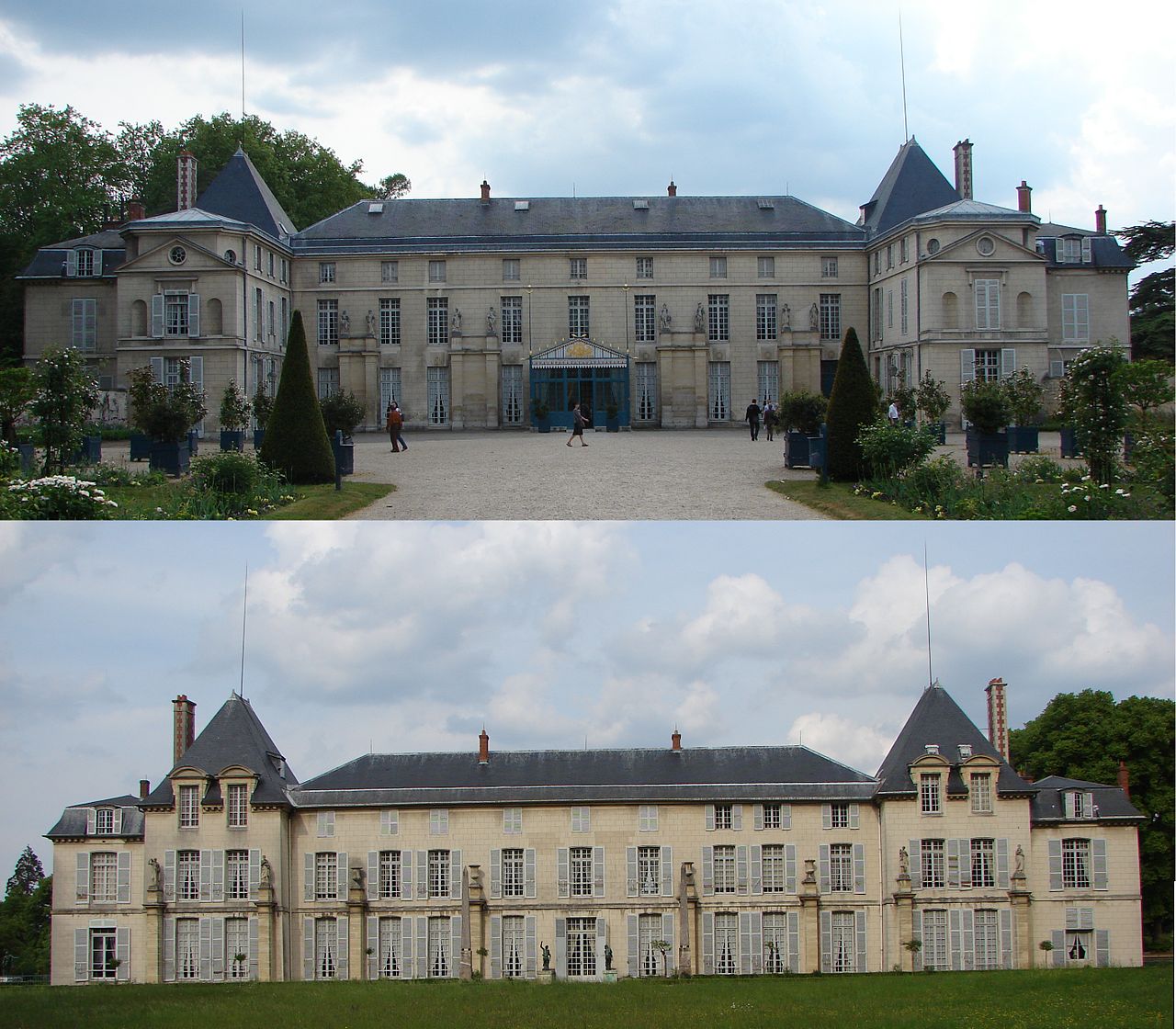
The Château de Malmaison is a French château situated near the left bank of the Seine, about 15 km west of the centre of Paris, in the commune of Rueil-Malmaison. Formerly the residence of Empress Joséphine de Beauharnais, along with the Tuileries, it was the headquarters of the French government from 1800 to 1802, and Napoleon's last residence in France at the end of the Hundred Days in 1815.
Also recorded as Chateau de Malmaison · Malmaison
Château de Malmaison
Copyleft · CC0
- Name
- Château de Malmaison
- Founded
- 1700
- Headquarters
- France
VALÉORINE Encyclopedia
VALÉORINE documentary reading
Documentary summary
The Château de Malmaison is a French château situated near the left bank of the Seine, about 15 km west of the centre of Paris, in the commune of Rueil-Malmaison. Formerly the residence of Empress Joséphine de Beauharnais, along with the Tuileries, it was the headquarters of the French government from 1800 to 1802, and Napoleon's last residence in France at the end of the Hundred Days in 1815.
Admitted source layer · organised and presented by VALÉORINE
Note VALÉORINE
No house-authored Note is published until its assertions and sources pass the VALÉORINE evidence contract. The documentary article remains available in full while that enrichment is being consolidated.
Documentary enrichment in progress · no unsupported statement published
Reference Check
Propose documentary evidence for Château de Malmaison. A contribution is never written directly as fact: identity, source, rights and evidence gates still decide.
Sign in to contribute
World of VALÉORINE
Documentary connections
Only confirmed graph relationships appear here. Images are shown only when their identity and reuse rights both pass the documentary gate.
Documentary evidence
Evidence Panel
not yet certified
- Identity
- resolved
- Independent source families
- 0
- Admitted assertions
- 0
- Open conflicts
- 0
Authority files
wikidata · Q684846 · wikipedia · Château de Malmaison
In this article
Key facts
Key facts
• Name — Château de Malmaison • Building Type — Château • Architectural Style — Renaissance, Empire • Location Town — Rueil-Malmaison • Location Country — France
History
History
• Illustration — Joséphine de Beauharnais at Malmaison in 1801 by François Gérard • Illustration — Napoleon Crossing the Alps, a painting by Jacques-Louis David from the Malmaison collection Joséphine de Beauharnais bought the manor house in April 1799 for herself and her husband, General Napoleon Bonaparte, the future Napoleon I of France, at that time away fighting the Egyptian Campaign. Malmaison was a run-down estate, 7 mi west of central Paris that encompassed nearly 150 acre of woods and meadows. Upon his return, Bonaparte expressed fury at Joséphine for purchasing such an expensive house with the money she had expected him to bring back from the Egyptian campaign. The house, for which she had paid well over 300,000 francs, needed extensive renovations; she spent a fortune doing them. However, Malmaison would bring great happiness to the Bonapartes. Joséphine's daughter, Hortense de Beauharnais would call it "a delicious spot". Joséphine endeavored to transform the large estate into "the most beautiful and curious garden in Europe, a model of good cultivation". She located rare and exotic plants and animals to enhance the gardens. Joséphine wrote: "I wish that Malmaison may soon become the source of riches for all [of France]." In 1800, she built a heated orangery large enough for 300 pineapple plants. Five years later, she ordered the building of a greenhouse, heated by a dozen coal-burning stoves. From 1803 until her death in 1814, Josephine cultivated nearly 200 new plants in France for the first time. The property achieved enduring fame for its rose garden. Empress Joséphine had the Belgian artist Pierre-Joseph Redouté (1759–1840) record her roses (and lilies), and prints of these works sell quite well, even today. She created an extensive collection of roses, gathering plants from her native Martinique and from other places around the world. She grew some 250 varieties of roses. From the foreword to Jardin de la Malmaison (1803): You have gathered around you the rarest plants growing on French soil...as we inspect them in the beautiful gardens of Malmaison, an impressive reminder of the conquests of your illustrious husband. Birds and animals of all sorts began to enrich her garden, where they were allowed to roam free among the grounds. At the height of her days at Malmaison, Joséphine had the company of kangaroos, emus, black swans, zebras, sheep, gazelles, ostriches, chamois, a seal, antelopes and llamas to name a few. Some were from the Baudin expedition. After her divorce from Napoléon, Joséphine received Malmaison in her own right, along with a pension of 5 million francs a year, and remained there until her death in 1814. Napoléon returned and took residence in the house after his defeat at the Battle of Waterloo (1815), before his exile to the island of Saint Helena. After Josephine's death in 1814, the house was vacant at times, the garden and house ransacked and vandalised, and the garden's remains were destroyed in a battle in 1870. In 1842, Malmaison was purchased by Queen mother Maria Christina, widow of King Ferdinand VII of Spain. She lived there with her second husband Agustín Fernando Muñoz, Duke of Riánsares (made a duke by his step-daughter, Isabella II of Spain, in 1844). In 1861, Maria Christina sold the property to Napoleon III, Josephine's grandson through her daughter Hortense. Damaged by fighting during the War of 1870, then by the installation of barracks in the château, the estate was sold by the State in 1877 to a goods merchant who gradually sold off parcels of land from the park. In 1896, the patron and philanthropist Daniel Iffla, known as Osiris, purchased the château along with its park, by then reduced to 6 hectares, and donated it to the State in 1903. A museum was opened on the estate in 1905. Malmaison was fully restored by the famous French architect Pierre Humbert in the early 20th century. It is now considered an important historical monument.
Present times
Present times
The public can visit the manor house as a Napoleonic musée national. The museum lies on RN 13 (route nationale 13) from Paris and bus 258 from RER A "Grande Arche" station.
Exterior
Exterior
• Illustration — View of the southwest facade of the Manor House • Illustration — Main entrance in the Manor House • Illustration — Pavillon Osiris in the Garden of Malmaison • Illustration — View of the main entrance and the main facade (northeast)
Interior
Interior
• Illustration — Chamber of Napoléon • Illustration — Billiard room • Illustration — Music room • Illustration — Joséphine's service - Sèvres porcelain • Illustration — Library created in 1800 by Charles Percier and Pierre-François-Léonard Fontaine • Illustration — Furniture in mahogany is the creation of the brothers Jacob-Desmalter • Illustration — The celestial globe of Nicolas Constant Lemaire, dating from 1788 • Illustration — Simply decorated anteroom • Illustration — Luxurious chamber of Joséphine de Beauharnais with her original bed. • Illustration — The wall decoration and the furniture were restored by Napoleon III in 1865 • Illustration — Common Chamber in Joséphine's apartment • Illustration — Bed in Joséphine's common chamber • Illustration — Bathroom in Joséphine's apartment • Illustration — Decoration designed by Charles Percier and Pierre-François-Léonard Fontaine • Illustration — Murals paintings by Louis Lafitte (1800) represent six pompéiennes dancers • Illustration — Dining room
Institutional history
Dated record
Institutional history
Explore 1668–1700
The full dated record · 4 entries
1668
Château de Malmaison is recorded at coordinates 48.8708, 2.1668.
1700
Château de Malmaison established.
1700
Château de Malmaison is recorded from 1700.
1700
Château de Malmaison was established or created in 1700.
Places
Named by the record
Places
Only places the record itself states, plotted where the house gazetteer settles their coordinates. Nothing is inferred from a name or a nationality.
- France
Primary material
Documents and archives
authority record
- Wikidata, structured authority record Q684846: Château de Malmaison
Unverified · Wikidata
reference work
- “Château de Malmaison”, English Wikipedia, consulted as further reading
Reputable secondary · Wikipedia
Citations
References
Each reference names the institution holding it, so a reader may go to the document itself.
authority record
Partially resolvedreference work
Partially resolved
The Encyclopedia exists whether or not anything is for sale. Corrections are recorded rather than overwritten, and every version of this record is kept. Published 14 August 2026.
Elsewhere in Institutions
3,152 published records in this field, each with its sources named.
- château de ChamarandeOrganisation
- Château de CompiègneOrganisation
- Château de FlersOrganisation
- château de LinardiéOrganisation
- Château de Montsoreau-Museum of Contemporary ArtOrganisation
- château de ToursOrganisation
- château des AllymesOrganisation
- Château-GaillardOrganisation
Best supported in this field
For owners
Own an object connected with Château de Malmaison?
A specialist will read what you send and tell you what the house can establish, what it cannot, and whether the object is suited to sale. There is no charge and no obligation. The object stays with you throughout; nothing is shipped to us unless it is arranged in writing beforehand.