
Boncompagni Ludovisi Decorative Art Museum
Boncompagni Ludovisi Decorative Arts Museum (Museo Boncompagni Ludovisi per le arti decorative, often abbreviated as the Museo Boncompagni), Rome, is the Decorative Arts Museum of the National Gallery of Modern Art of Rome. The Museum is located at Via Boncompagni, 18, near the elegant and historical Via Veneto.
Also recorded as Museo Boncompagni Ludovisi per le arti decorative
Boncompagni Ludovisi Decorative Art Museum
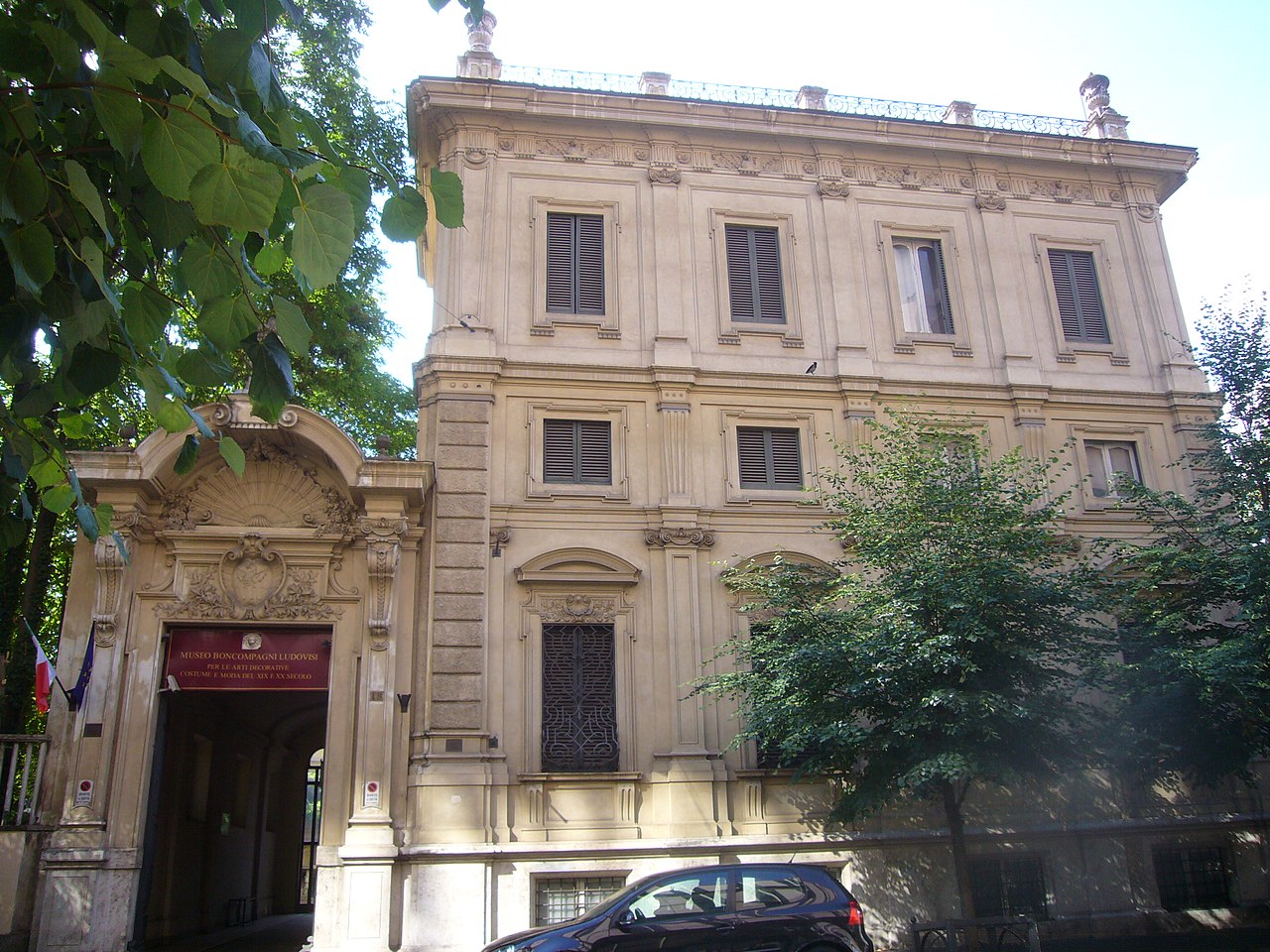
Lalupa · CC BY-SA 3.0
- Founded
- 1995.
- Headquarters
- Italy.
- Part of
- Villa Ludovisi.
VALÉORINE Encyclopedia
VALÉORINE documentary reading
Documentary summary
Boncompagni Ludovisi Decorative Arts Museum (Museo Boncompagni Ludovisi per le arti decorative, often abbreviated as the Museo Boncompagni), Rome, is the Decorative Arts Museum of the National Gallery of Modern Art of Rome. The Museum is located at Via Boncompagni, 18, near the elegant and historical Via Veneto.
Admitted source layer · organised and presented by VALÉORINE
Note VALÉORINE
No house-authored Note is published until its assertions and sources pass the VALÉORINE evidence contract. The documentary article remains available in full while that enrichment is being consolidated.
Documentary enrichment in progress · no unsupported statement published
Reference Check
Propose documentary evidence for Boncompagni Ludovisi Decorative Art Museum. A contribution is never written directly as fact: identity, source, rights and evidence gates still decide.
Sign in to contribute
Documentary evidence
Evidence Panel
wikipedia incomplete · checked 25 September 2026
- Identity
- resolved
- Independent source families
- 0
- Admitted assertions
- 0
- Open conflicts
- 0
Authority files
wikidata · Q3867580 · wikipedia · Boncompagni Ludovisi Decorative Art Museum
In this article
History
History
Opened in 1995 to promote and develop the Italian decorative arts, costume and fashion, Boncompagni Ludovisi Museum is located in the Villino Boncompagni, an Art Nouveau villa, built in the early years of the twentieth century. The “Villino Boncompagni” was donated in 1972 by the princess Blanceflor de Bildt Boncompagni to the Italian Republic to promote art and culture. After the restoration of the building, carried out in the eighties, the “Villino” was given by the Ministero dei beni e delle attività culturali e del turismo, MiBACT (Italian Ministry for Cultural Heritage) at the National Gallery of Modern and Contemporary Art of Rome. Liberty style artists Galileo Chini (1873 – 1956) and Vittorio Zecchin (1878 – 1947) created a number of panels in 1914 for the Venice Hotel Terminus called "La Primavera" and "Mille e una notte", which were influenced by Gustav Klimt's style who exhibited at the 1910 Venice Biennale. These were later exhibited in the museum.
Organization
Organization
Boncompagni Ludovisi Museum collects paintings, sculptures, ceramics and original furnishings of the “Villino Boncompagni” and works of art coming from the Galleria Nazionale d'Arte Moderna of Rome. It houses about eight hundred pieces of clothing and fashion accessories illustrating Italian fashion history and showing the debut of the Italian fashion, at the beginning of the 1900 to reach its extreme results of recent decades. The Museum also hosts temporary cultural and contemporary art exhibitions.
Exhibitions
Exhibitions
Tristano di Robilant. (2007)[link removed] La danza fotografica da Luciano Usai. (2008) Pino Procopio, Ulisse, Scene da un viaggio. (2008)[link removed] Arnaldo Ginna Futurista. (2009) Lo zoo di Pinocchio. Galleria di ritratti dei personaggi-animali. Disegni di Filippo Sassoli. (2009) Rolando Monti - Dal tonalismo all'astrazione lirica. (2010) Fernanda Gattinoni. Moda e stelle ai tempi della Hollywood sul Tevere. (2011) Falsi ma Belli. (2011) Palma Bucarelli. La Palma della bellezza. (2012) Zecchin - Cambellotti e Le Mille e una notte. (2013) Joseph Pace, L'Eva Futura. (2014) Lydia Predominato, Una via d'uscita per un cuore costretto. (2014) Libri d'Artista, L'Arte da Leggere. (2021) Direzione dei Musei statali di Roma. Libri d'Artista, L'Arte da Leggere. (2021) Il Gioiello nella Moda e nell'Arte e Libro d'artista di Joseph Pace, Flowers#2. (2022)
Institutional history
Dated record
Institutional history
The full dated record · 1 entries
1995
Boncompagni Ludovisi Decorative Art Museum established.
Notes from the source article
Cited by Wikipedia
Notes from the source article
These works are cited by the source article, in its own numbering. They are recorded as its citations, not as sources VALÉORINE has verified.
- 1.Sanna, Angela. Art Nouveau. Editions Place des Victoires. 2011. 978-2-8099-0418-5.
- 2.Vittorio Zecchin e Galileo Chini Galleria Internazionale d'Arte Moderna Ca' Pesaro Venezia.
- 3.Dalle Mille e una notte a Venezia: Le principesse di Vittorio Zecchin, il Klimt italiano.
- 4.Spirito klimtiano: Galileo Chini, Vittorio Zecchin e la grande decorazione a Venezia - Mostra - Venezia - Ca' Pesaro - Galleria Internazionale d'Arte Moderna - Arte.it.
- 5.Galileo Chini il mito della Primavera - Museo Boncompagni Roma. 17 April 2020.
References
Citations
References
Each reference names the institution holding it, so a reader may go to the document itself.
reference work
Partially resolvedreference work
“Boncompagni Ludovisi Decorative Art Museum”, English Wikipedia, consulted as further readingWikipedia
Partially resolved
The Encyclopedia exists whether or not anything is for sale. Corrections are recorded rather than overwritten, and every version of this record is kept. Published 14 August 2026.
Elsewhere in Institutions
3,152 published records in this field, each with its sources named.
- Bologna Gallery of Modern ArtOrganisation
- Bologna Museum of Modern ArtOrganisation
- Bolton MuseumOrganisation
- Bolu MuseumOrganisation
- Bonn Egyptian MuseumOrganisation
- Bonnefanten MuseumOrganisation
- Booth Western Art MuseumOrganisation
- Borgia ApartmentOrganisation
Best supported in this field
For owners
Own an object connected with Boncompagni Ludovisi Decorative Art Museum?
A specialist will read what you send and tell you what the house can establish, what it cannot, and whether the object is suited to sale. There is no charge and no obligation. The object stays with you throughout; nothing is shipped to us unless it is arranged in writing beforehand.