
Baltic psaltery
Baltic psaltery is a family of related plucked box zithers, psalteries, historically found in the southeast vicinity of the Baltic Sea and played by the Baltic people, Baltic Finns, Volga Finns and northwestern Russians.
Baltic psaltery
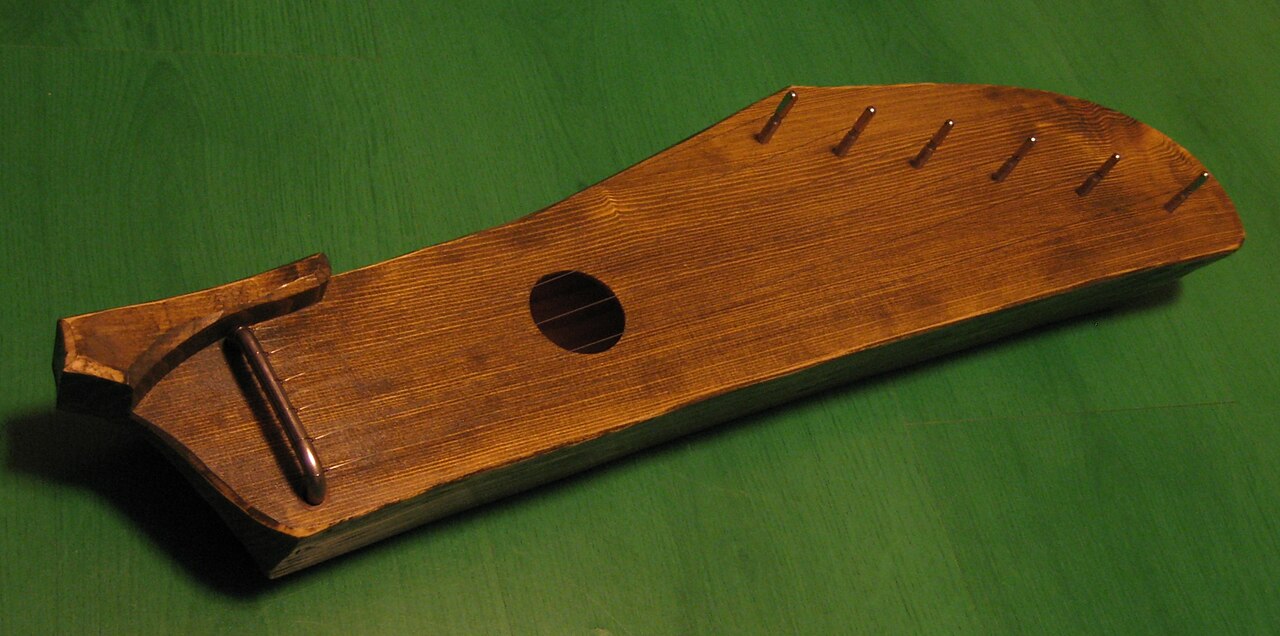
Adeliine · CC BY-SA 3.0
- Field
- box zither · Baltic musical instrument · Slavic musical instrument
VALÉORINE Encyclopedia
VALÉORINE documentary reading
Documentary summary
Baltic psaltery is a family of related plucked box zithers, psalteries, historically found in the southeast vicinity of the Baltic Sea and played by the Baltic people, Baltic Finns, Volga Finns and northwestern Russians.
Admitted source layer · organised and presented by VALÉORINE
Reference Check
Propose documentary evidence for Baltic psaltery. A contribution is never written directly as fact: identity, source, rights and evidence gates still decide.
Sign in to contribute
World of VALÉORINE
Documentary connections
Only confirmed graph relationships appear here. Images are shown only when their identity and reuse rights both pass the documentary gate.


Documentary evidence
Documentary basis
Authority files
wikidata · Q4852742 · wikipedia · Baltic psaltery
In this article
Types
Types
Baltic psalteries include: • Kanklės (Lithuania) • Kantele (Finland, Karelia and Northwest Russia) • Kannel (Estonia) • Kāndla (Livonian people of Northwest Latvia) • Kokles (Latvia) • Krez (Udmurt people of Central Russia) • Krylovidnye gusli (Northwest Russia) • Kusle (Mari people of Central Russia) • Harpu (Sápmi) The internationally most known instrument of the family is Finnish kantele, so its name is sometimes used in English to also refer to other Baltic psalteries as well. Many of the Baltic psalteries hold a strong symbolic significance in their respective countries, including Finland, Latvia, Lithuania, Estonia and Russia, where playing instruction and instrument makers are available.
Etymology
Etymology
According to Finnish linguist Eino Nieminen, the names kanklės, kantele, kannel, kāndla and kokles possibly come from the proto-Baltic form *kantlīs/*kantlēs, which originally meant 'the singing tree', ultimately deriving from the Proto-European root *qan- ('to sing, to sound'). However, Lithuanian ethnologist Romualdas Apanavičius believes they could be derived from the Proto-European root *gan(dh)-, meaning 'a vessel; a haft (of a sword)', suggesting that it may be related to the Russian word gusli.
The Baltic Psaltery Symposia
The Baltic Psaltery Symposia
Since 1990 Baltic Psaltery Symposia have taken place in Finland (1990; 1997; 2008), Lithuania (1994; 2017), Latvia (2000), Canada (2004) and Estonia (2013) every three or four years on a rotating basis.
References
Citations
References
Each reference names the institution holding it, so a reader may go to the document itself.
reference work
Secondary witnessreference work
Secondary witness
Connections
The Encyclopedia exists whether or not anything is for sale. Corrections are recorded rather than overwritten, and every version of this record is kept. Published 16 August 2026.
Elsewhere in Collectables
20,755 published records in this field, each with its sources named.
- Balls of SteelWork
- Bally AstrocadeTerminology
- BallyhooWork
- BallzWork
- BaltronWork
- bamboo clapperTerminology
- bamboo fluteTerminology
- bamboo musical instrumentTerminology
Best supported in this field
For owners
Own an object connected with Baltic psaltery?
A specialist will read what you send and tell you what the house can establish, what it cannot, and whether the object is suited to sale. There is no charge and no obligation. The object stays with you throughout; nothing is shipped to us unless it is arranged in writing beforehand.