
Archeological Museum of Seville
The Archeological Museum of Seville (Spanish: Museo Arqueológico de Sevilla) is a museum in Seville, southern Spain, housed in the Pabellón del Renacimiento, one of the pavilions designed by the architect Aníbal González. These pavilions at the Plaza de España were created for the Ibero-American Exposition of 1929.
Archeological Museum of Seville
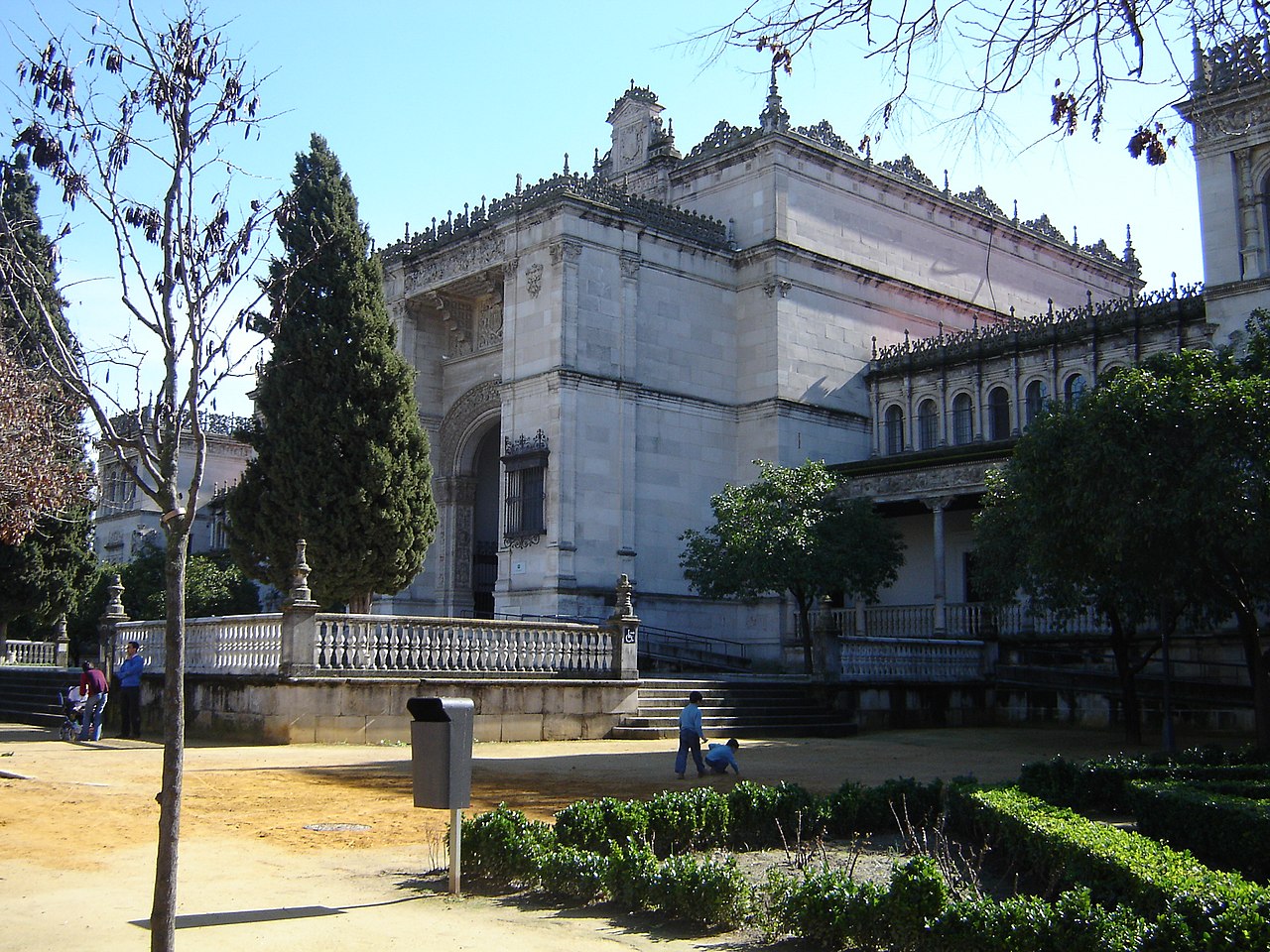
Public domain
- Name
- Archeological Museum of Seville
- Founded
- 1879
- Headquarters
- Archeological Museum of Seville building
VALÉORINE Encyclopedia
VALÉORINE documentary reading
Documentary summary
The Archeological Museum of Seville (Spanish: Museo Arqueológico de Sevilla) is a museum in Seville, southern Spain, housed in the Pabellón del Renacimiento, one of the pavilions designed by the architect Aníbal González. These pavilions at the Plaza de España were created for the Ibero-American Exposition of 1929.
Admitted source layer · organised and presented by VALÉORINE
Note VALÉORINE
No house-authored Note is published until its assertions and sources pass the VALÉORINE evidence contract. The documentary article remains available in full while that enrichment is being consolidated.
Documentary enrichment in progress · no unsupported statement published
Reference Check
Propose documentary evidence for Archeological Museum of Seville. A contribution is never written directly as fact: identity, source, rights and evidence gates still decide.
Sign in to contribute
World of VALÉORINE
Documentary connections
Only confirmed graph relationships appear here. Images are shown only when their identity and reuse rights both pass the documentary gate.
Documentary evidence
Evidence Panel
not yet certified
- Identity
- resolved
- Independent source families
- 0
- Admitted assertions
- 0
- Open conflicts
- 0
Authority files
wikidata · Q637061 · wikipedia · Archeological Museum of Seville
In this article
Key facts
Key facts
• Name — Archeological Museum of Seville • Native Name — Museo Arqueológico de Sevilla • Type — Archaeology museum • Established — 1879 • Location — Seville, Spain • Architect — Aníbal González • Owner — General State Administration
History
History
The institution was created via royal order issued on 21 November 1879. Following a move of the collection to the Pabellón del Renacimiento started in 1942, 8 exhibition rooms were opened in the new premises on 25 May 1946.
Places
Named by the record
Places
Only places the record itself states, plotted where the house gazetteer settles their coordinates. Nothing is inferred from a name or a nationality.
- Spain
Collection
The museum's basement houses the El Carambolo treasure, discovered in Camas (3 km NW of Seville) in 1958. The treasure comprises 2950 grams of 24-carat gold and consists of golden bracelets, a golden chain with pendant, buckles, belt- and forehead plates. The hoard, initially associated to Tartessos, has been however interpreted since the 1990s rather as part of a Phoenician sanctuary; this later hypothesis was verified by new archaeological digs in the 2000s. The treasure includes a small figurine of Astarte, a Phoenician goddess. Other halls of the museum contain findings from the Roman era, many of which are from the nearby Roman city of Itálica. The Itálica exhibits include mosaics, statues (including the famous Venus of Itálica), and busts of the emperors Augustus, Vespasianus, Trajan and Hadrian. Another of the iconic sculptural items of the collection is the Seated marriage of Orippo, donated by the Marquise of Esquivel in 1944. • Illustration — Valencina idol-plaque (3000–2100 BC) • Illustration — The so-called Bronze Carriazo • Illustration — Venus from Italica (117 AD)
Citations
References
Each reference names the institution holding it, so a reader may go to the document itself.
reference work
Partially resolvedreference work
Partially resolved
The Encyclopedia exists whether or not anything is for sale. Corrections are recorded rather than overwritten, and every version of this record is kept. Published 14 August 2026.
Elsewhere in Institutions
3,152 published records in this field, each with its sources named.
- Archbishop's Towers Interpretation Centre (CITA)Organisation
- Archeological Civic Museum of BolognaOrganisation
- Archeological Museum of ButrintOrganisation
- Archeological Museum of PascaOrganisation
- Archeologisch Museum HaarlemOrganisation
- ArcheonOrganisation
- Archiepiscopal Museum of RavennaOrganisation
- Architecture & Design MuseumOrganisation
Best supported in this field
For owners
Own an object connected with Archeological Museum of Seville?
A specialist will read what you send and tell you what the house can establish, what it cannot, and whether the object is suited to sale. There is no charge and no obligation. The object stays with you throughout; nothing is shipped to us unless it is arranged in writing beforehand.