
Alfredo Wiechers Pieretti
Alfredo Wiechers Pieretti was a Puerto Rican architect from Ponce, Puerto Rico. He was an expositor of the Neoclassicism and Art Nouveau architectural styles, doing most of his work in his hometown of Ponce. Today, Alfredo Wiechers' city residence, located in the Ponce Historic Zone and which he designed himself, is a museum, the Museo de la Arquitectura Ponceña.
Also recorded as Alfredo B. Wiechers
Alfredo Wiechers Pieretti

Oquendo · CC BY 2.0
- Name
- Alfredo Wiechers Pieretti
- Born
- 26 March 1881
- Birthplace
- Ponce, Puerto Rico
- Died
- 15 July 1964
- Place of death
- Barcelona, Spain
- Occupation
- Engineering, Architect
- Movement
- Neoclassical architecture
- Spouse
- Carmen Gilet
- Education
- École Spéciale d'Architecture
- Nationality
- United States
- Fields
- engineering
- Known for
- Casa Serrallés
VALÉORINE Encyclopedia
VALÉORINE documentary reading
Documentary summary
Alfredo Wiechers Pieretti was a Puerto Rican architect from Ponce, Puerto Rico. He was an expositor of the Neoclassicism and Art Nouveau architectural styles, doing most of his work in his hometown of Ponce. Today, Alfredo Wiechers' city residence, located in the Ponce Historic Zone and which he designed himself, is a museum, the Museo de la Arquitectura Ponceña.
Admitted source layer · organised and presented by VALÉORINE
Note VALÉORINE
Alfredo Wiechers Pieretti (1881–1964) was an architect, of American nationality. The architect was born in Ponce and died in Barcelona.
Alfredo Wiechers Pieretti was educated at Special School of Architecture. Activity centred on engineering. Alfredo Wiechers Pieretti was associated with Neoclassical architecture. Among the works is Casa Serrallés.
Composed from admitted, traceable facts · 27 September 2026
VALÉORINE
Reference Check
Propose documentary evidence for Alfredo Wiechers Pieretti. A contribution is never written directly as fact: identity, source, rights and evidence gates still decide.
Sign in to contribute
World of VALÉORINE
Documentary connections
Only confirmed graph relationships appear here. Images are shown only when their identity and reuse rights both pass the documentary gate.
Documentary evidence
Documentary basis
Authority files
wikidata · Q4723890 · wikipedia · Alfredo Wiechers Pieretti
In this article
Biography
Biography
After enriching his hometown city with some of the most architecturally exquisite buildings, he moved to Spain arguing political persecution by the authorities in the Island.

Mausoleo Bomberos de Ponce en el Cementerio Civil, Barrio Portugués Urbano, Ponce, Puerto Rico
Tito Caraballo
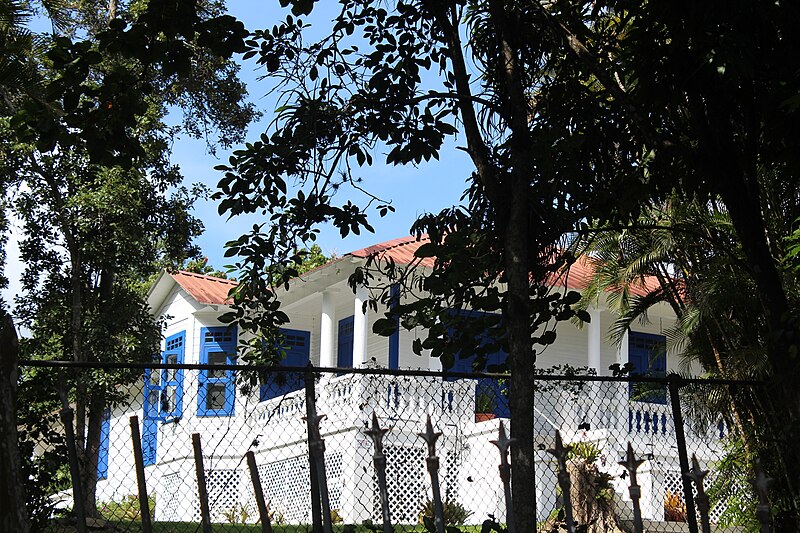
Villa Julita
Ligocsicnarf89
Key facts
Key facts
• Name — Alfredo Wiechers Pieretti • Born — 26 March 1881 • Birthplace — Ponce, Puerto Rico • Died — 15 July 1964 • Place of death — Barcelona, Spain • Resting Place — Montjuïc Cemetery • Occupation — Engineering, Architect • Movement — Neoclassical architecture • Notable Works — Casa Serrallés, Oppenheimer House, Blasini Residence, Quinta Vendrell, Club Deportivo de Ponce, Logia Aurora, Club Deportivo de Damas, Teatro Habana (aka, Teatro Rivoli), Banco of Ponce, Hospital Santo Asilo de Damas, Casa Wiechers-Villaronga, Monumento a los heroes de El Polvorín • Spouse — Carmen Gilet • Education — École Spéciale d'Architecture
Early years
Early years
Alfredo Braulio Wiechers Pieretti was born in Ponce, Puerto Rico, on 26 March 1881. He was the youngest of five children born to the German Georg Friederich Wiechers Kelm and Isabel Pieretti Marsaud, a Ponceña woman of Corsican ancestry. Alfredo's father was a businessman from Hamburg, Germany who settled in Ponce around 1860 and in 1865 he was named Prussia's consul for Ponce. He was re-appointed in 1872 and 1874, at a time when Ponce was the capital of the southern region of Puerto Rico (San Juan was the capital of the northern region).
Training
Training
Upon the death of his father in Ponce, Wiechers Pieretti, still an adolescent, came to be under the guardianship of Juan Lacot, the husband of Rosa Wiechers Pieretti, Alfredo's oldest sister. A short while later they moved to Barcelona, and Alfredo started studies in Paris at the École Spéciale d'Architecture. In 1901, he was awarded a gold medal for outstanding achievement and excellence during his professional studies. He graduated in 1905 and worked at the office of Enric Sagnier, a famous Spanish architect, in Barcelona, Spain. He lived in Barcelona for six years while working at Enric's distinguished studio. In 1908 Wiechers Pieretti married Ponce-born Carmen Gilet in Barcelona, and in 1910 he returned to Puerto Rico, settling in Ponce.
His residence
His residence
Alfredo Wiechers returned to Ponce in 1910 and, within two years, he built what is known today as the Wiechers-Villaronga Residence. He built it as his own residence and studio. He later sold the pompous home to Mr. Gabriel Villaronga. In a short period of time, from 1911 to 1918, Wiechers was commissioned with various important buildings such as: the Logia Aurora, Club Deportivo de Damas, the Havana Theater, Banco of Ponce Building, and Santo Asilo de Damas Hospital among others, where he fully expressed the European Neo-Classical style which he had learned from Enric Sagnier. Alfredo Wiechers lived in his house for seven years.
His works
His works
• Illustration — The Casa Oppenheimer, one of Wiechers' designs After leaving his architectural mark on the city of Ponce (Casa Serralles, Oppenheimer House) he sold his house to the Villaronga family and fled in 1919 to Barcelona, under political pressure. Although his prolific works (1911–1918) include hotels, stores, mausoleums, and even factories, the majority of his work was done in Ponce—he ventured out of Ponce only to design two structures for wealthy Catalan families in the neighboring mountain towns of Adjuntas and Aibonito. His work in Puerto Rico includes the designs for Logia Adelphia, Don Eugenio Serralles Residence (Casa Serrallés), the Oppenheimer House, and the Blasini Residence. He also designed the Club Deportivo de Ponce (Ponce Sports Club), the Vendrell House, and homes for the Gelpí and Arce families. Wiechers designed and built Casa Serrallés (not to be confused with Castillo Serrallés) in 1911. This commodious residence is located in downtown Ponce, at the southeast corner of Calle Isabel and Calle Salud and is currently home to the Museo de la Música Puertorriqueña. In 1911, Wiechers also designed the Mausoleo del Cuerpo de Bomberos of the City of Ponce (Mausoleum of the Corps of Firemen of the City of Ponce) located at the Cementerio Civil de Ponce on Calle Cementerio Civil in barrio Canas Urbano. He also designed Villa Julita also known as Casa Ulrich, a residence located in Aibonito, which is listed on the National Register of Historic Places.
Life and career
Dated record
Life and career
The full dated record · 2 entries
1881
Alfredo Wiechers Pieretti born at Ponce.
1964
Alfredo Wiechers Pieretti died at Barcelona.
Places
Named by the record
Places
Only places the record itself states, plotted where the house gazetteer settles their coordinates. Nothing is inferred from a name or a nationality.
Ponce.
Birth place
Barcelona.
Death place
Later years and legacy
In 1918 Wiechers returned with his family to Spain, claiming political persecution by the authorities in Puerto Rico. After this, he never performed as an architect again for health reasons as well as not being on possession of a license to practice architecture. He died on 15 July 1964, and was interred at the Montjuïc Cemetery in Barcelona at the Mausoleum of the Gilet family. He is honored at Ponce's Park of the Illustrious Ponce Citizens. The Architecture and Construction Archives at the University of Puerto Rico (AACUPR) is the custodian of the Alfredo Wiechers Collection (1896–1986). Approximately 1.5 cubic feet in size, the collection contains architectural drawings, photographs, and publications. The Architectural Drawings Series contains 128 projects organized chronologically. The collection was transferred from the Puerto Rico Architects Association in 1998. He also designed Quinta Vendrell, Barrio Portugués, located at the junction of PR-143 and PR-123, Adjuntas, Puerto Rico, which is listed on the National Register of Historic Places.
Notes from the source article
Cited by Wikipedia
Notes from the source article
These works are cited by the source article, in its own numbering. They are recorded as its citations, not as sources VALÉORINE has verified.
- 1.Jorge Rigau. Puerto Rico 1900: Turn-of-the-Century Architecture in the Hispanic Caribbean, 1890-1930. New York: Rizzoli International Publishers. 1992. page 131.
- 2.La Casa de la Calle Reina. Revista "Hola Puerto Rico" (magazine). Retrieved 15 November 2010.
- 3.La Casa de la Calle Reina. Revista "Hola Puerto Rico" (magazine). Retrieved 15 November 2010.
- 4.La Presencia Germanica en Puerto Rico. Haydee Reichard de Cancio. PREB: Nuestra Trayectoria Historica y Cultural. Retrieved 24 May 2010.
- 5.Auxiliar descriptivo de la Colección Alfredo Wiechers. University of Puerto Rico at Aguadilla Library. (A Horizon Information Portal.) Retrieved 24 May 2010.
- 6.Auxiliar descriptivo de la Colección Alfredo Wiechers. University of Puerto Rico at Aguadilla Library. (A Horizon Information Portal.) Retrieved 24 May 2010.
- 7.Museum of Ponce Architecture: Casa Wiechers Villaronga. TravelPonce.com Retrieved 27 October 2011.
- 8.La Presencia Germanica en Puerto Rico. By Haydee Reichard de Cancio. PREB: Nuestra Trayectoria Historica y Cultural. Retrieved 24 May 2010.
- 9.Auxiliar descriptivo de la Colección Alfredo Wiechers. University of Puerto Rico at Aguadilla Library. (A Horizon Information Portal.) Retrieved 24 May 2010.
- 10.Armando Morales Pares, State Architect, S.H.P.O., Abelardo Gonzalez Aviles, Architect, Centro de Investigaciones Folkloricas de Puerto Rico (Ponce, Puerto Rico), State Historic Preservation Officer, Certifying Officer. 18 May 1984. In National Register of Historic Places Inventory-Nomination Form - Villaronga Residence. United States Department of the Interior. National Park Service. (Washington, D.C.) Page 3. Listing Reference Number 84003151. 24 August 1984.
- 11.Museum of Ponce Architecture: Casa Wiechers Villaronga. TravelPonce.com Retrieved 27 October 2011.
- 12.Auxiliar descriptivo de la Colección Alfredo Wiechers. University of Puerto Rico at Aguadilla Library. (A Horizon Information Portal.) Retrieved 24 May 2010.
- 13.Armando Morales Pares, State Architect, S.H.P.O., Abelardo Gonzalez Aviles, Architect, Centro de Investigaciones Folkloricas de Puerto Rico (Ponce, Puerto Rico), State Historic Preservation Officer, Certifying Officer. 18 May 1984. In National Register of Historic Places Inventory-Nomination Form - Villaronga Residence. United States Department of the Interior. National Park Service. (Washington, D.C.) Page 3. Listing Reference Number 84003151. 24 August 1984.
- 14.Armando Morales Pares, State Architect, S.H.P.O., Abelardo Gonzalez Aviles, Architect, Centro de Investigaciones Folkloricas de Puerto Rico (Ponce, Puerto Rico), State Historic Preservation Officer, Certifying Officer. 18 May 1984. In National Register of Historic Places Inventory-Nomination Form - Villaronga Residence. United States Department of the Interior. National Park Service. (Washington, D.C.) Page 3. Listing Reference Number 84003151. 24 August 1984.
- 15.Auxiliar descriptivo de la Colección Alfredo Wiechers. University of Puerto Rico at Aguadilla Library. (A Horizon Information Portal.) Retrieved 24 May 2010.
- 16.Museum of Ponce Architecture: Casa Wiechers Villaronga. TravelPonce.com Retrieved 27 October 2011.
- 17.Auxiliar descriptivo de la Colección Alfredo Wiechers. University of Puerto Rico at Aguadilla Library. (A Horizon Information Portal.) Retrieved 24 May 2010.
- 18.100 años del Mausoleo de Bomberos . La Perla del Sur. Ponce, Puerto Rico. 27 October 2011. Retrieved 27 October 2011. Updated link and re-accessed on 27 May 2020.
- 19.United States Department of the Interior, National Park Service. Villa Julita. National Parks.
- 20.Jorge Rigau. Puerto Rico 1900: Turn-of-the-Century Architecture in the Hispanic Caribbean, 1890-1930. New York: Rizzoli International Publishers. 1992. page 131.
- 21.Auxiliar descriptivo de la Colección Alfredo Wiechers. University of Puerto Rico at Aguadilla Library. (A Horizon Information Portal.) Retrieved 24 May 2010.
- 22.Architecture. TravelPonce. Retrieved 13 July 2012.
- 23.ABW: Colección Alfredo Wiechers. ARCHIVO DE ARQUITECTURA Y CONSTRUCCIÓN DE LA UNIVERSIDAD DE PUERTO RICO. Rio Piedras, Puerto Rico. 2020. Accessed 27 May 2020.
- 24.Archivo de Arquitectura y Construccion- UPRRP- AACUPUR. ARCHIVO Y CENTRO DE INVESTIGACIÓN. ARCHIVO DE ARQUITECTURA Y CONSTRUCCIÓN DE LA UNIVERSIDAD DE PUERTO RICO: Colección Alfredo Wiechers (1896-1986). ArchRED: La Red de Archivos de Puerto Rico. > Conoce los Archivos de Puerto Rico > Archivo de Arquitectura y Construccion- UPRRP- AACUPUR. p. 2. Accessed 27 May 2020.
- 25.National Register of Historic Places Registration: Quinta Vendrell / Granja San Andres. Olga de la Rosa Andujar and Juan Llanes Santos. United States National Park Service. NRHP id=06000028. pp. 4, 7. Accessed 27 May 2020.
References
Citations
References
Each reference names the institution holding it, so a reader may go to the document itself.
reference work
Secondary witnessreference work
Secondary witness
Further particulars
Held on the record
Further particulars
Open the remaining particulars
Alfredo Wiechers Pieretti studied at Special School of Architecture. His recorded influences include Enric Sagnier.
The Encyclopedia exists whether or not anything is for sale. Corrections are recorded rather than overwritten, and every version of this record is kept. Published 18 August 2026.
Elsewhere in Design
11,558 published records in this field, each with its sources named.
- Alfredo Jones BrownDesigner
- Alfredo LambertucciDesigner
- Alfredo S.G. TaylorDesigner
- Alfredo Vera ArrataDesigner
- Algernon Winter RoseDesigner
- Algirdas KaušpėdasDesigner
- Ali Akbar IsfahaniDesigner
- Ali Akbar SaremiDesigner
Best supported in this field
For owners
Own a work by Alfredo Wiechers Pieretti?
A specialist will read what you send and tell you what the house can establish, what it cannot, and whether the object is suited to sale. There is no charge and no obligation. The object stays with you throughout; nothing is shipped to us unless it is arranged in writing beforehand.