
Albert-Ernest Carrier-Belleuse
Albert-Ernest Carrier-Belleuse (born Albert-Ernest Carrier de Belleuse; 12 June 1824 – 4 June 1887) was a French sculptor. He was one of the founding members of the Société Nationale des Beaux-Arts, and was made an officer of the Legion of Honour.
Also recorded as A. E. Carrier-Belleuse · Albert Ernest Carrier- Belleuse · Albert-Ernest Carrier · Albert Ernest Carrier de Belleuse
Albert-Ernest Carrier-Belleuse
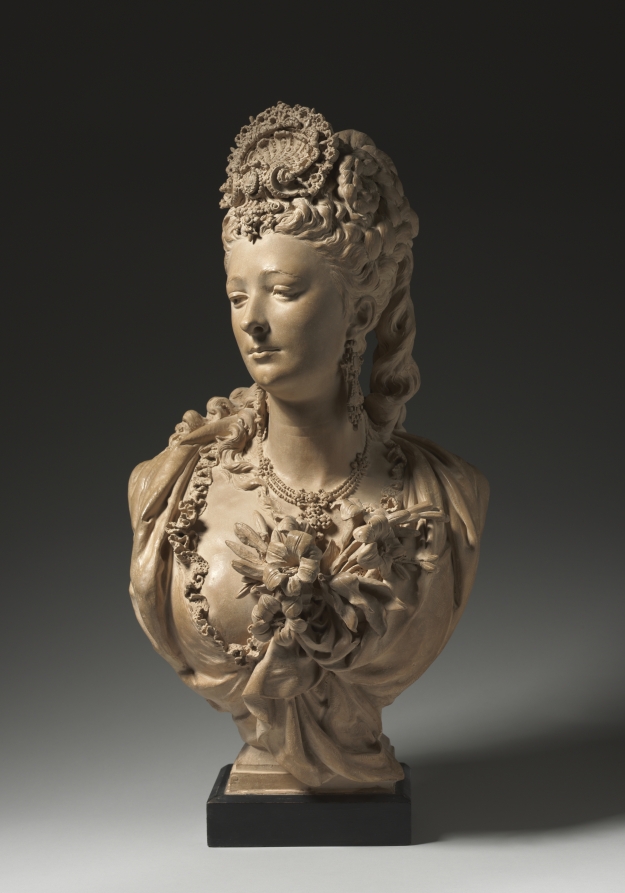
Albert-Ernest Carrier-Belleuse · The Cleveland Museum of Art · Andrew R. and Martha Holden Jennings Fund · CC0
- Name
- Albert-Ernest Carrier-Belleuse
- Born
- 12 June 1824
- Birthplace
- Anizy-le-Château, Aisne, France
- Died
- 4 June 1887
- Place of death
- Sevres, France
- Field
- Sculpture
- Full name
- Albert-Ernest Carrier de Belleuse.
- Nationality
- France.
- Occupation
- sculptor.
- Fields
- art of sculpture.
- Teachers
- David d'Angers.
- Known for
- The Abduction of Hippodameia.
VALÉORINE Encyclopedia
VALÉORINE documentary reading
Documentary summary
Albert-Ernest Carrier-Belleuse (born Albert-Ernest Carrier de Belleuse; 12 June 1824 – 4 June 1887) was a French sculptor. He was one of the founding members of the Société Nationale des Beaux-Arts, and was made an officer of the Legion of Honour.
Admitted source layer · organised and presented by VALÉORINE
Reference Check
Propose documentary evidence for Albert-Ernest Carrier-Belleuse. A contribution is never written directly as fact: identity, source, rights and evidence gates still decide.
Sign in to contribute
World of VALÉORINE
Documentary connections
Only confirmed graph relationships appear here. Images are shown only when their identity and reuse rights both pass the documentary gate.
Documentary evidence
Documentary basis
Authority files
wikidata · Q2143726 · wikipedia · Albert-Ernest Carrier-Belleuse
In this article
Biography
Biography
Training under David d'Angers is recorded. Auguste Rodin, Louis-Robert Carrier-Belleuse and Joseph Gustave Chéret are recorded as having studied under Albert-Ernest Carrier-Belleuse. The recorded working language is French. The field of work recorded is art of sculpture. Places of work recorded in the authority are France and Belgium. Works named in the authority record are The Abduction of Hippodameia. Work by Albert-Ernest Carrier-Belleuse is recorded in the collections of Minneapolis Institute of Art, Museo del Prado, Art Institute of Chicago, The Nelson-Atkins Museum of Art and Nationalmuseum. Distinctions recorded are Officer of the Legion of Honour and Knight of the Order of Leopold.
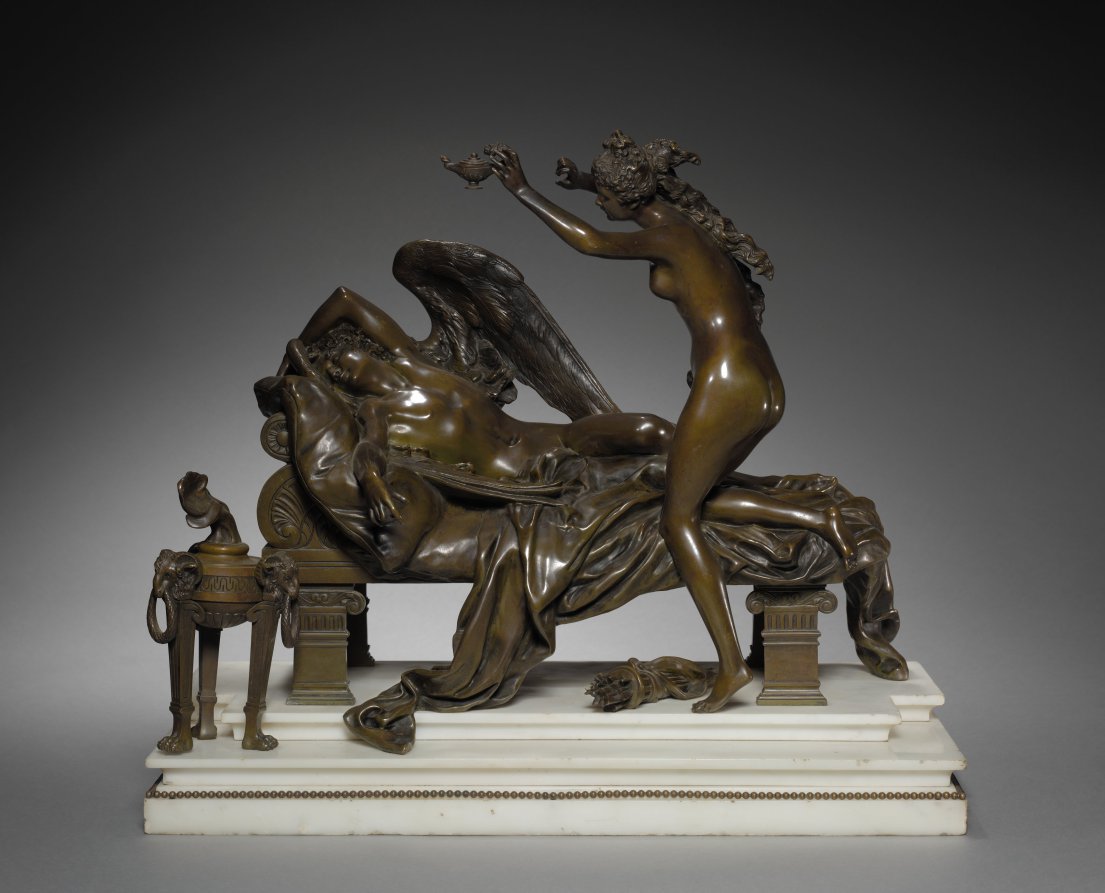
Cupid and Psyche, c. 1870, by Albert-Ernest Carrier-Belleuse
Albert-Ernest Carrier-Belleuse · The Cleveland Museum of Art · Given in memory of Milton S. Fox by Mrs. Milton S. Fox and family
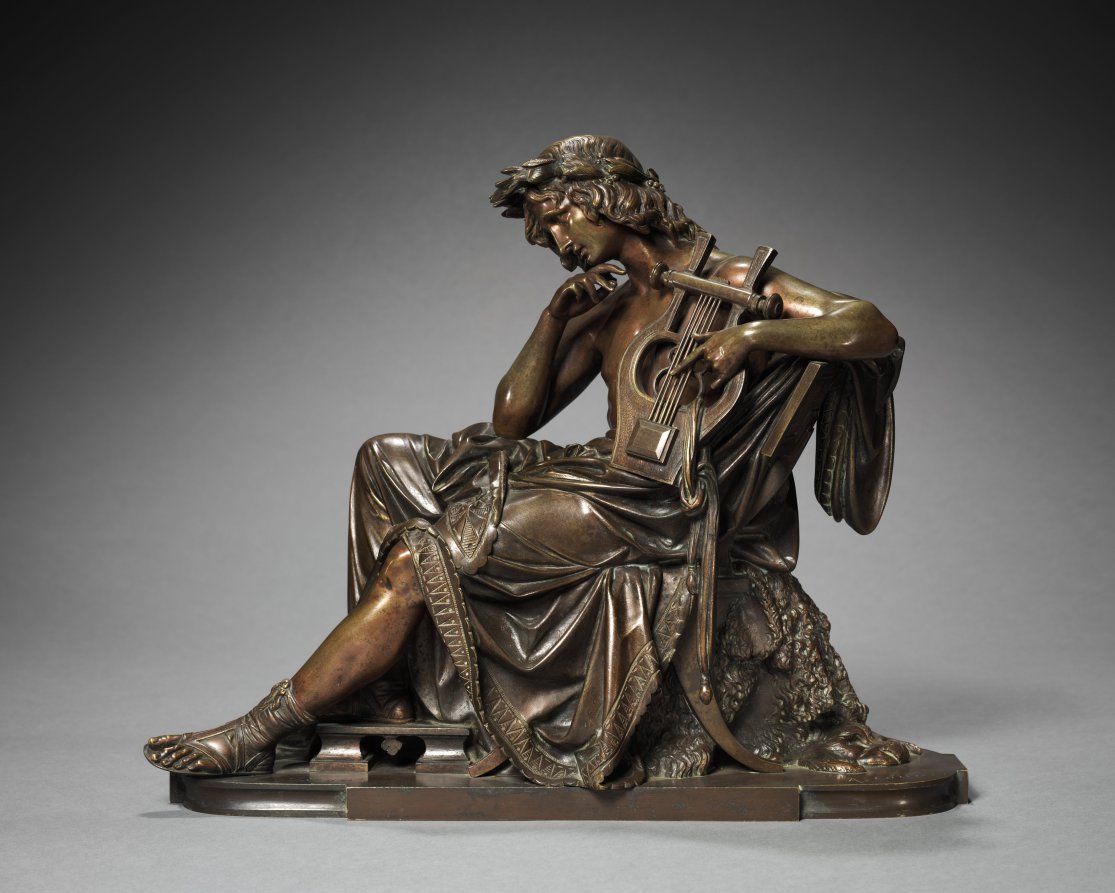
Orpheus, early 1860s, by Albert-Ernest Carrier-Belleuse
Albert-Ernest Carrier-Belleuse · The Cleveland Museum of Art · Gift in honor of Berenice H. Kent
Key facts
Key facts
• Name — Albert-Ernest Carrier-Belleuse • Born — 12 June 1824 • Birthplace — Anizy-le-Château, Aisne, France • Died — 4 June 1887 • Place of death — Sevres, France • Field — Sculpture
Early life
Early life
Carrier-Belleuse was born on 12 June 1824 at Anizy-le-Château, Aisne, France. He began his training as a goldsmith's apprentice. Carrier-Belleuse was a student of David d'Angers and briefly studied at the École des Beaux-Arts. His career is distinguished by his versatility and his work outside France: in England between 1850 and 1855 (working for Mintons), and in Brussels around 1871. His name is perhaps best known because Auguste Rodin worked as his assistant between 1864 and 1870. The two travelled to Brussels in 1871, and by some accounts Rodin assisted Carrier-Belleuse's architectural sculpture for the Brussels Stock Exchange.
Career
Career
• Illustration — La Bacchante, 1863, Musée d'Orsay Carrier-Belleuse made many terra cotta pieces, the most famous of which may be The Abduction of Hippodameia depicting the Greek mythological scene of a centaur kidnapping Hippodameia on her wedding day. He was made artistic director at the Manufacture nationale de Sèvres in 1876.
Société Nationale des Beaux-Arts
Société Nationale des Beaux-Arts
In 1862 Carrier-Belleuse was one of the founding members of the Société Nationale des Beaux-Arts, and was made an officer of the Légion d'honneur. The bronzes he executed prior to 1868 were always signed "Carrier" or "A. Carrier", but after 1868 his signature was changed to "Carrier-Belleuse".
Artistic style
Artistic style
His work encompassed all manner of sculptural subjects and materials, and his naturalism incorporated a breadth of styles: unembellished Realism, neo-Baroque exuberance, and Rococo elegance.
Family
Family
His sons were the painters Louis-Robert Carrier-Belleuse (1848-1913) and Pierre Carrier-Belleuse (1851-1932).
Works of art
Works of art
• Pediment sculpture of Abundance, Pavillon de Flore, South façade of the Great Galerie, Louvre palace, Paris, circa 1863 • Caryatids themed on the four seasons, Vichy Opera, for architect Charles Badger, 1865 • Architectural sculpture for the Tribunal de commerce de Paris (Commercial Court of Paris), on the Île de la Cité, for architect Antoine-Nicolas Bailly, completed 1865 • A silvered bronze chimney-piece for the Hôtel de la Païva, Paris, 1866 • Monument to André Masséna, Nice, 1869 • Architectural work at the Brussels Stock Exchange, Brussels, circa 1870 • Mary Queen of Scots, Private Collection, ca. 1870 • Two elaborate multifigure torchères for the base of grand staircase, Palais Garnier (Paris Opera), Pairs, 1873 • Tomb of Belgian photographer Louis Ghémar, Laeken Cemetery, Brussels, 1873 • Architectural work for the Théâtre de la Renaissance, Paris, for architect Charles de Lalande, 1873 • Sea Nymph for the fountain at the Place du Theâtre-Français, Paris, for architect Gabriel Davioud, 1874 • Bust of Aimée-Olympe Desclée for her tomb, 1874 • Four Seasons fountain, Hotel de Ville, Fleurance • Mausoleum of José de San Martín, Buenos Aires Metropolitan Cathedral, Buenos Aires • Equestrian statue of Mihai Viteazul, University Square, Bucharest, Romania • Equestrian statue of Manuel Belgrano, Plaza de Mayo Square, Buenos Aires, Argentina • Equestrian statue of Bernardo O'Higgins, Alameda, Santiago de Chile, Chile • Statue for the victims of the La Compañía fire, originally at the place of the fire, today in front of the General Cemetery in Santiago de Chile, Chile
Gallery
Gallery
• Illustration — Bust of Carrier-Belleuse by Auguste Rodin • Illustration — Equestrian statue of Mihai Viteazul in Bucharest • Illustration — Marie Carrier-Belleuse, 1859, Musée d'Orsay • Illustration — Bust of a Woman with a Diadem, c. 1860–1870, Musée d'Orsay • Illustration — Harmony, Museum of Fine Arts, Ghent • Illustration — Hebe asleep, c. 1869, Musée d'Orsay • Illustration — Leda and the Swan, c. 1870, Metropolitan Museum of Art • Illustration — Psyche, 1872 • Illustration — Sea Nymph from a fountain on the Place du Théâtre-Français, Paris, 1874
Identity and origins
Identity and origins
Albert-Ernest Carrier-Belleuse was recorded at birth as Albert-Ernest Carrier de Belleuse. The authorities additionally record the headings A. Carrier-Belleuse, Albert Ernest Carrier- Belleuse, Albert-Ernest Carrier, Albert Ernest Carrier de Belleuse and Albert Ernest Carrier-Belleuse. His recorded language was French. He married Louise-Anne Adnot. 4 children are recorded: Louis-Robert Carrier-Belleuse, Pierre Carrier-Belleuse, Suzanne Carrier-Belleuse and Henriette Carrier-Belleuse.
Life and career
Dated record
Life and career
Explore 1824–1887
The full dated record · 3 entries
1824
Albert-Ernest Carrier-Belleuse born at Anizy-le-Château.
1850
Undine - Albert Ernest Carrier-Belleuse, dated 1850, held by Aberdeen Archives, Gallery and Museums collections.
1887
Albert-Ernest Carrier-Belleuse died at Sèvres.
Places
Named by the record
Places
Only places the record itself states, plotted where the house gazetteer settles their coordinates. Nothing is inferred from a name or a nationality.
Anizy-le-Château.
Birth place
Sèvres.
Death place
Death and legacy
Carrier-Belleuse died on 4 June 1887 at Sèvres, France.
Recognition and collections
Where the work is held
Recognition and collections
Albert-Ernest Carrier-Belleuse received Officer of the Legion of Honour and Knight of the Order of Leopold.
Holdings and surviving copies
Where the work is held
Holdings and surviving copies
Where material relating to Albert-Ernest Carrier-Belleuse is held.
Literature
Scholarly footprint
A count of publications is evidence of attention, not of standing, and is given here only as a measure.
Notes from the source article
Cited by Wikipedia
Notes from the source article
These works are cited by the source article, in its own numbering. They are recorded as its citations, not as sources VALÉORINE has verified.
- 1.The J. Paul Getty Museum -- Albert-Ernest Carrier-Belleuse. getty.edu.
- 2.August Rodin Working Methods. vam.ac.uk.
- 3.The Grove encyclopedia of decorative arts, Volume 1 By Gordon Campbell
- 4.Musee d'Orsay -- Sculpture. musee-orsay.fr.
- 5.Encyclopedia of nineteenth-century photography, Volume 1 By John Hannavy
References
Citations
References
Each reference names the institution holding it, so a reader may go to the document itself.
reference work
Wikidata, structured authority record Q2143726: Albert-Ernest Carrier-BelleuseWikimedia Foundation
Secondary witnessreference work
Secondary witness
Further particulars
Held on the record
Further particulars
Open the remaining particulars
He trained under David d'Angers. Each of those relationships is stated by the authority record rather than inferred from style.
The Encyclopedia exists whether or not anything is for sale. Corrections are recorded rather than overwritten, and every version of this record is kept. Published 16 August 2026.
Elsewhere in Sculpture
6,174 published records in this field, each with its sources named.
- Albert ToftArtist
- Albert WeinertArtist
- Albert WolffArtist
- Albert XaveryArtist
- Alberto ArnoldiArtist
- Alberto ChissanoArtist
- Alberto CorazónArtist
- Alberto PeralArtist
Best supported in this field
For owners
Own a work by Albert-Ernest Carrier-Belleuse?
A specialist will read what you send and tell you what the house can establish, what it cannot, and whether the object is suited to sale. There is no charge and no obligation. The object stays with you throughout; nothing is shipped to us unless it is arranged in writing beforehand.