
Agostino Veneziano
Illustration — Engraving by Veneziano of Alcibiades Agostino Veneziano ("Venetian Agostino"), whose real name was Agostino de' Musi (c. 1490), was an important and prolific Italian engraver of the Renaissance.
Also recorded as Agostino de Musis · Agostino de Musi · Agostino dei Mussi · Agostino Veneziano Musi
Agostino Veneziano
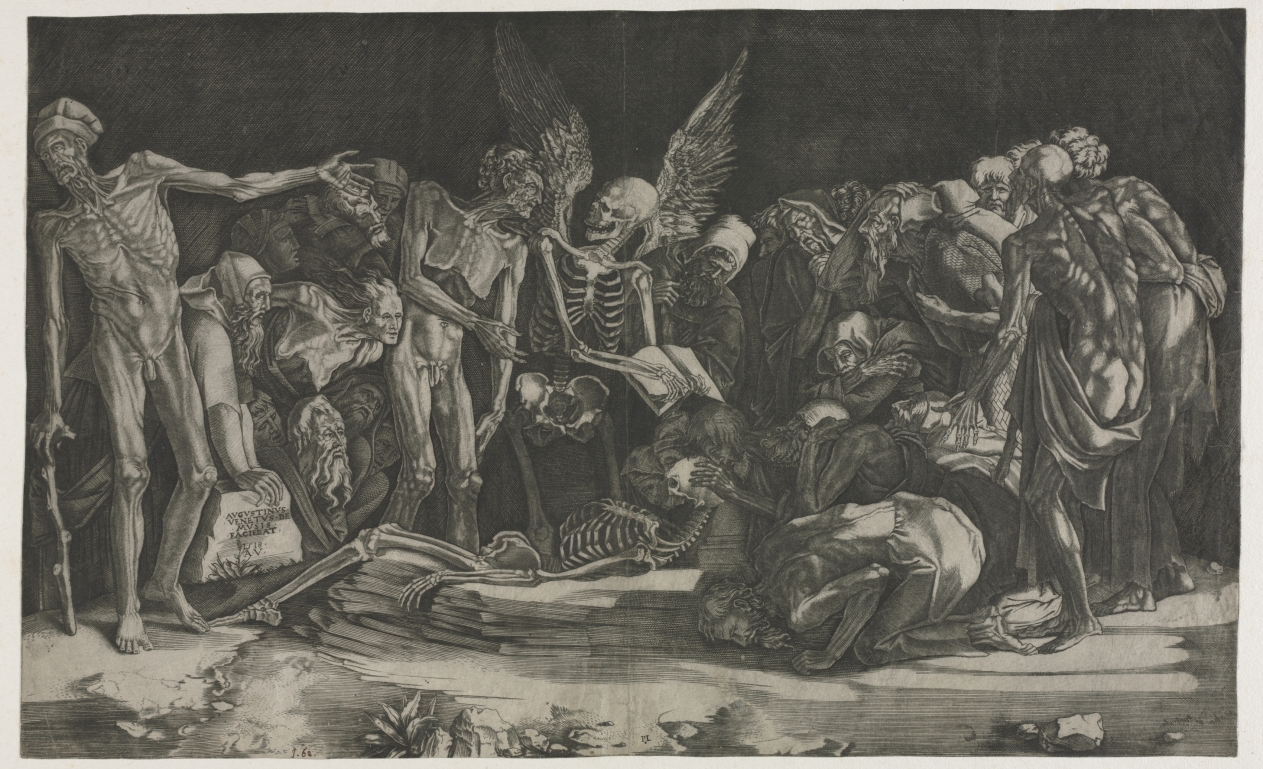
Agostino Veneziano · The Cleveland Museum of Art · Andrew R. and Martha Holden Jennings Fund · CC0
- Born
- 1490
- Died
- 1540
- Nationality
- Republic of Venice
- Occupation
- engraver · graphic artist · visual artist
- Known for
- Story of Amor and Psyche after Michiel Coxie
VALÉORINE Encyclopedia
VALÉORINE documentary reading
Documentary summary
Illustration — Engraving by Veneziano of Alcibiades Agostino Veneziano ("Venetian Agostino"), whose real name was Agostino de' Musi (c. 1490), was an important and prolific Italian engraver of the Renaissance.
Admitted source layer · organised and presented by VALÉORINE
Note VALÉORINE
Agostino Veneziano (1490–1540) was an engraver, graphic artist and visual artist and a national of the Republic of Venice. Works include Story of Amor and Psyche after Michiel Coxie.
Composed from admitted, traceable facts · 27 September 2026
VALÉORINE
Reference Check
Propose documentary evidence for Agostino Veneziano. A contribution is never written directly as fact: identity, source, rights and evidence gates still decide.
Sign in to contribute
Documentary evidence
Evidence Panel
not yet certified
- Identity
- resolved
- Independent source families
- 0
- Admitted assertions
- 0
- Open conflicts
- 0
Authority files
wikidata · Q2623716 · wikipedia · Agostino Veneziano
In this article
Life
Life
Veneziano was born in Venice, where he trained as an artist, though his teacher is unknown. He initially copied prints by Albrecht Dürer and Giulio Campagnola from about 1512 to 1514, and then producing his own works, somewhat in the style of the latter. He spent some time in Florence around 1515–1516. He moved to Rome, perhaps as early as 1514, and by 1516 had joined the printmaking workshop of Marcantonio Raimondi, of which he was one of the most important members until it was broken up by the sack of Rome in 1527. Unlike many produced by the workshop, most of Agostino's plates avoided being confiscated and melted down by Charles V's soldiers, and continued to be printed in later years. Agostino returned to Venice after the sack, and later visited Mantua and Florence before returning to Rome in 1531, remaining until at least 1536. It is assumed he died there, though there is no documentation. He was the only major figure whose career spanned the whole period which saw the birth of the reproductive print, and the beginnings of the "industrialization" of Italian printmaking.
Works
Works
Although many of his prints bear his monogram, others do not, and he is a party in several disputed attributions, among them perhaps his most famous print, Lo stregozzo (The Sorcerers), an extravagant fantasy rather atypical of his work. Some works are disputed between him and Campagnola, and later between him and Raimondi or others in his circle; his manner was never very individual, but his technique good enough to allow confusion between his work and those whose style he followed. The Academy of Baccio Bandinelli of 1531 is also an important work, but his many prints after Raphael and Giulio Romano were the best known of his works in his own day. His print known as The Climbers (1521) records a part of a cartoon drawing by Michelangelo for a large painting of the Battle of Cascina for the Palazzo Vecchio in Florence, never completed. He made a large series of prints of the story of Psyche to designs by Michael Coxcie. His career probably never entirely recovered from the Sack of Rome; in Venice his illustrations for Serlio were not used, though he continued to produce prints after Raphael, Giulio Romano and others in his later years, sometimes doing new versions of his older works. In his final Roman period he produced a series of prints of antique vases, that were early examples of the images of antiquities that were to become so common. Passavant attributed 188 prints to him, though a new total would probably increase this number; 141 prints have his monogram, and probably all are by him. • Illustration — These nine fragments cut from seven engravings are thought to by Agostino Veneziano. It is thought that they were copied from "A set of offsets from Giulio's (Giulio Romano's) Modi drawings." I modi was a book that contained engravings of sexual scenes. Paper. British Museum, London. Around 1530.
I Modi
I Modi
It is thought that Agostino Veneziano may have created a single replacement set of engravings for the images created by Giulio Romano and Marcantonio Raimondi in I Modi. There is one whole image and nine fragments cut from seven engravings that are in the British Museum and it is thought that all of these images come from this replacement set of engravings by Agostino. It is thought that this replacement set of engravings may have been copied from "A set of offsets from Giulio's Modi drawings...". These engravings by Agostino are dated to around 1530. I modi was a book that contained engravings of sexual scenes.
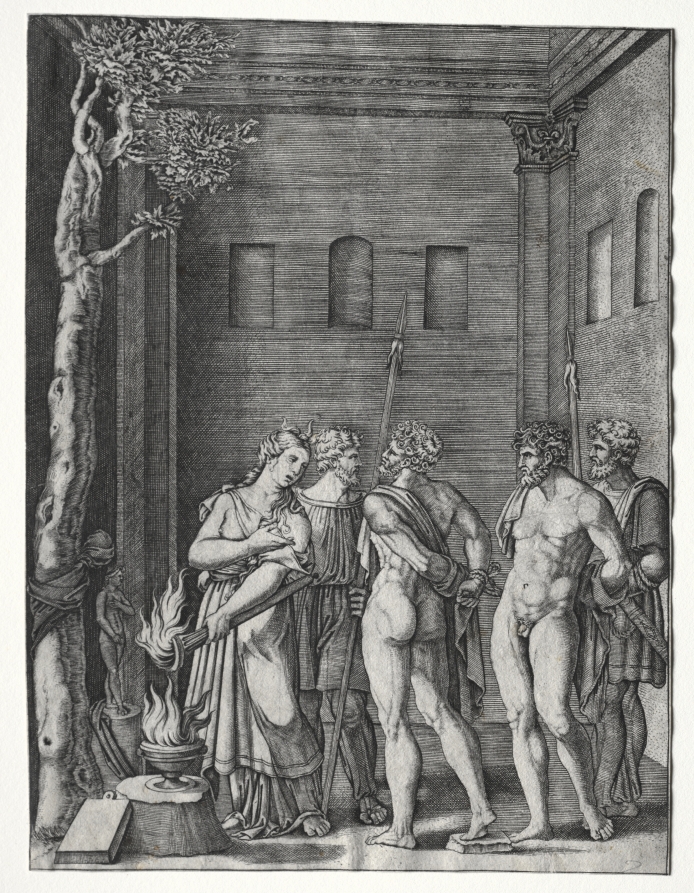
Orestes and Pylades brought to Iphigenia for Sacrifice, 1514/1536, by Agostino Veneziano
Agostino Veneziano · The Cleveland Museum of Art · Gift of Leonard C. Hanna Jr.
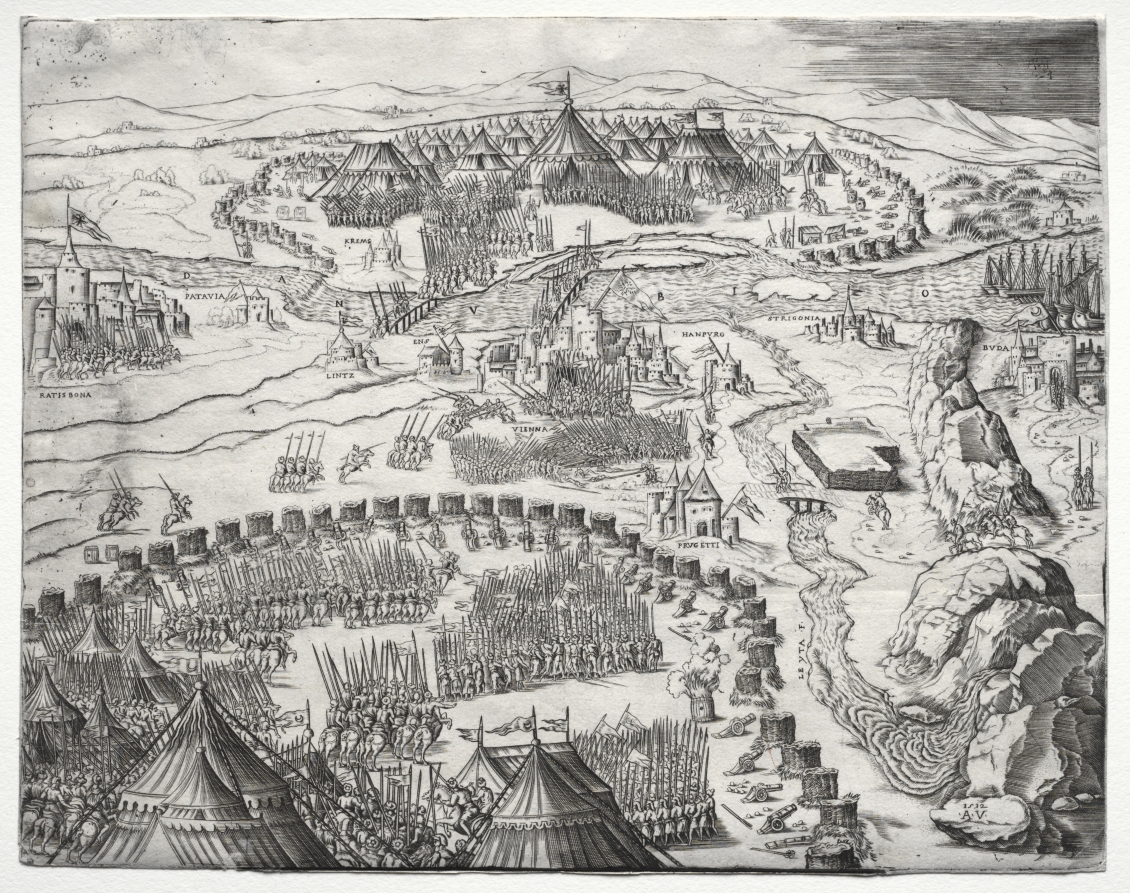
The Position and Camp of the Armies of Charles V and Soliman II, 1532, by Agostino Veneziano
Agostino Veneziano · The Cleveland Museum of Art · Gift of The Print Club of Cleveland
Life and career
Dated record
Life and career
The full dated record · 2 entries
1490
Agostino Veneziano born at Venice.
1540
Agostino Veneziano died at Rome.
Primary material
Documents and archives
Institutional database
- Wikidata, structured authority record Q2623716: Agostino Veneziano
Scholarly · Wikimedia Foundation
reference work
- “Agostino Veneziano”, English Wikipedia, consulted as further reading
Reputable secondary · Wikipedia
Notes from the source article
Cited by Wikipedia
Notes from the source article
These works are cited by the source article, in its own numbering. They are recorded as its citations, not as sources VALÉORINE has verified.
- 1.Landau:143
- 2.Landau p.122
- 3.Harvard also sometimes attributed to Raimondi, showing a witch out gathering babies - on permanent display in The Viktor Wynd Museum of Curiosities, Fine art & Natural History. The design may be by Giulio Romano.
- 4.LACMA.
- 5.Harvard . The cartoon itself is lost, though there is a small version in oil by another artist, and several small drawings by Michelangelo survive. But until the arrival of photography the composition was mainly known from Agostino's print.
- 6.3 of the series, from Chicago
- 7.In other words he was not worth faking. For a full catalogue raisonné see: Angelika Marinovic, Die Kupferstiche Agostino Venezianos und die Funktionen der italienischen Druckgrafik des frühen Cinquecento, PhD thesis, University of Vienna 2021.
- 8.James Grantham Turner. Marcantonio's Lost Modi and their Copies. Print Quarterly. 21. 4. 368. December 2004. 41826241.
- 9.James Grantham Turner. Woodcut Copics of the "Modi". Print Quarterly. 26. 2. 115, 116–117. June 2009. 43826068.
- 10.James Grantham Turner. Marcantonio's Lost Modi and their Copies. Print Quarterly. 21. 4. December 2004. 41826241.
References
Citations
References
Each reference names the institution holding it, so a reader may go to the document itself.
Institutional database
Wikidata, structured authority record Q2623716: Agostino VenezianoWikimedia Foundation
Verifiedreference work
Partially resolved
The Encyclopedia exists whether or not anything is for sale. Corrections are recorded rather than overwritten, and every version of this record is kept. Published 14 August 2026.
Elsewhere in Prints
4,138 published records in this field, each with its sources named.
- Agnes NanogakEngraver
- Agnes TaitEngraver
- Agostino AglioEngraver
- Agostino CarracciEngraver
- Agustina Gutiérrez SalazarEngraver
- Ahmad Amin NazarEngraver
- Aili VahtrapuuEngraver
- Aimé MaeghtEngraver
Best supported in this field
For owners
Own a work by Agostino Veneziano?
A specialist will read what you send and tell you what the house can establish, what it cannot, and whether the object is suited to sale. There is no charge and no obligation. The object stays with you throughout; nothing is shipped to us unless it is arranged in writing beforehand.